Automation communication networks
🚀 CNet, DNet & ENet – The Three Pillars of Rockwell Automation Networking
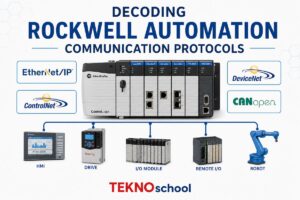
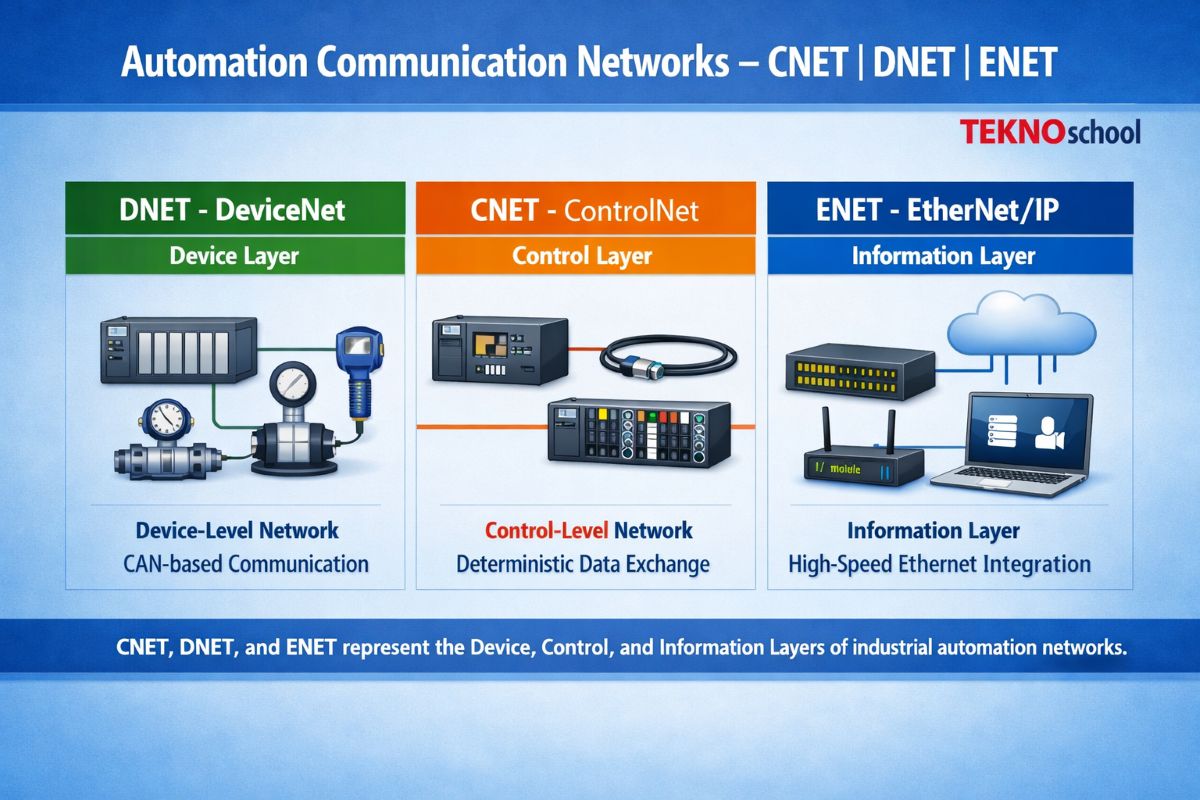
Industrial automation systems depend heavily on robust, deterministic, and scalable communication networks. Rockwell Automation’s CIP‑family technologies — ControlNet (CNet), DeviceNet (DNet), and EtherNet/IP (ENet) — form the backbone of thousands of plants worldwide. Each network was engineered for a specific layer of control, and understanding their strengths, limitations, and migration paths is essential for modern automation design.
🧩 1. The CIP Family – One Protocol, Three Networks
All three networks share the Common Industrial Protocol (CIP) — the same object model, same services, same device profiles.
What differs is the transport layer:
- ControlNet → Coax/Fiber, deterministic token‑passing
- DeviceNet → CAN‑based, device‑level bus
- EtherNet/IP → Standard Ethernet (IEEE 802.3)
This separation allows Rockwell systems to scale from simple sensors to high‑speed motion control.
📊 2. Quick Comparison Table (Exam‑Ready)
| Network | Speed | Medium | Nodes | Best For |
|---|---|---|---|---|
| ControlNet | 5 Mbps | Coax/Fiber | ~99 | Deterministic scheduled I/O |
| DeviceNet | 125–500 kbps | 5‑wire trunk/drop | 64 | Sensors, actuators, MCCs |
| EtherNet/IP | 100 Mbps–1 Gbps | Copper/Fiber | 254+ | Plantwide control, motion, safety |
🔵 3. ControlNet (CNet) – Deterministic Scheduled Control
ControlNet was introduced to solve a major problem in early automation: guaranteed, repeatable update times. It uses a token‑passing mechanism and scheduled communication windows, ensuring that every node gets a predictable time slot.
⭐ Key Technical Features
- 5 Mbps fixed bandwidth
- Deterministic (scheduled + unscheduled traffic separation)
- Supports redundancy (dual coax)
- Up to 99 nodes per segment
- High noise immunity due to coax/fiber
📌 Where It Excels
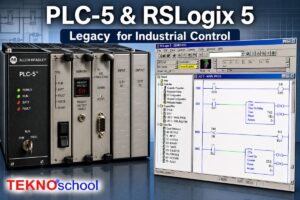
- ControlLogix, PLC‑5, Flex I/O systems
- Synchronized I/O where timing is critical
- Environments with high EMI
📉 Limitations
- Specialized cabling
- Harder to troubleshoot
- Moving toward an active mature lifecycle status
🧭 Migration Insight
Rockwell recommends migrating to EtherNet/IP, which offers better lifecycle support, more tools, and wider technician availability.
🟡 4. DeviceNet (DNet) – The Device‑Level Workhorse
DeviceNet is built on CAN (Controller Area Network) — the same technology used in automobiles. It was designed to connect sensors, actuators, VFDs, and MCCs using a single cable carrying both power and data.
⭐ Key Technical Features
- 125 / 250 / 500 kbps speeds
- Power + signal on the same trunk
- 64 nodes per network
- Trunk‑and‑drop architecture
- Excellent for low‑cost, short‑distance applications
📌 Strengths
- Very cost‑effective
- Easy to add/remove devices
- Great for MCCs and machine‑level networks
- Highly reliable due to CAN arbitration
📉 Limitations
- Limited bandwidth
- Limited cable distance
- Not suitable for high‑speed I/O or motion
🧭 When to Use
- Brownfield plants with existing DeviceNet
- Systems needing power + communication in one cable
- Simple machines with low data requirements
🟢 5. EtherNet/IP (ENet) – The Modern Industrial Backbone
EtherNet/IP is Rockwell’s flagship network — a high‑speed, scalable, IT‑friendly industrial Ethernet protocol. It uses standard IEEE 802.3 Ethernet and supports CIP Motion, CIP Safety, and large distributed architectures.
⭐ Key Technical Features
- 100 Mbps to 1 Gbps
- Supports star, ring, DLR, fiber topologies
- 254+ nodes (rotary switch addressing)
- Rich diagnostics and easy integration with IT systems
📌 Strengths
- High bandwidth for motion, vision, safety
- Easy to scale across entire plants
- Uses standard Ethernet tools (DHCP, switches, VLANs)
- Long‑term lifecycle support
📉 Limitations
- Requires proper network design (QoS, segmentation)
- More sensitive to poor cabling practices
🧭 When to Use
- All new Rockwell Automation projects
- High‑speed I/O, motion control, robotics
- Connected Enterprise / Industry 4.0 architectures
🔧 6. Migration Strategy – From CNet & DNet to ENet
Rockwell’s modernization guidance is clear:
New installations should use EtherNet/IP because ControlNet is aging, and DeviceNet is limited in speed and scalability.
Migration Path
- Replace ControlNet bridges with ENet modules
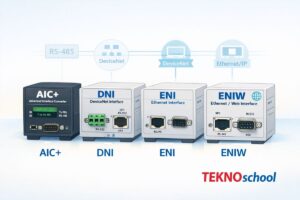
- Use gateways for DeviceNet islands
- Reuse existing fiber where possible (new connectors may be required)
- Segment networks using VLANs and managed switches
- Adopt DLR for ring redundancy
🧠 7. Practical Selection Guide
Choose ControlNet if:
- You need deterministic timing in a legacy system
- The plant already has coax/fiber ControlNet infrastructure
Choose DeviceNet if:
- You want low‑cost device‑level networking
- You need power + communication on one cable
- You are working with MCCs or simple machines
Choose EtherNet/IP if:
- You are designing a new system
- You need motion, safety, or high‑speed I/O
- You want scalability and long‑term support
⚠️ 8. Risks & Trade‑offs
ControlNet Risks
- Aging technology
- Harder troubleshooting
- Limited bandwidth
DeviceNet Risks
- Limited distance & speed
- Not suitable for modern high‑data applications
EtherNet/IP Risks
- Requires disciplined network design
- Cybersecurity must be addressed
🏁 9. Summary
ControlNet, DeviceNet, and EtherNet/IP each serve a unique purpose in Rockwell Automation architectures:
- ControlNet → deterministic, scheduled, legacy backbone
- DeviceNet → low‑cost device‑level connectivity
- EtherNet/IP → modern, scalable, plantwide industrial Ethernet
With Industry 4.0 and Connected Enterprise initiatives accelerating, EtherNet/IP is the future, while CNet and DNet remain relevant in brownfield and device‑level applications.