Centrifugal Pumps – Working, Cavitation, NPSH, Protection
Centrifugal Pumps – Working, Cavitation, NPSH, Protection
Centrifugal pumps are the most widely used industrial pumps across chemical plants, refineries, water treatment facilities, and utility systems. Their simple design, smooth flow, and ability to handle large volumes make them the backbone of fluid‑handling operations. This article explains the fundamentals of centrifugal pumps, cavitation, Net Positive Suction Head (NPSH), pump protection, gas binding, priming, and real‑world applications.
1. Introduction to Centrifugal Pumps
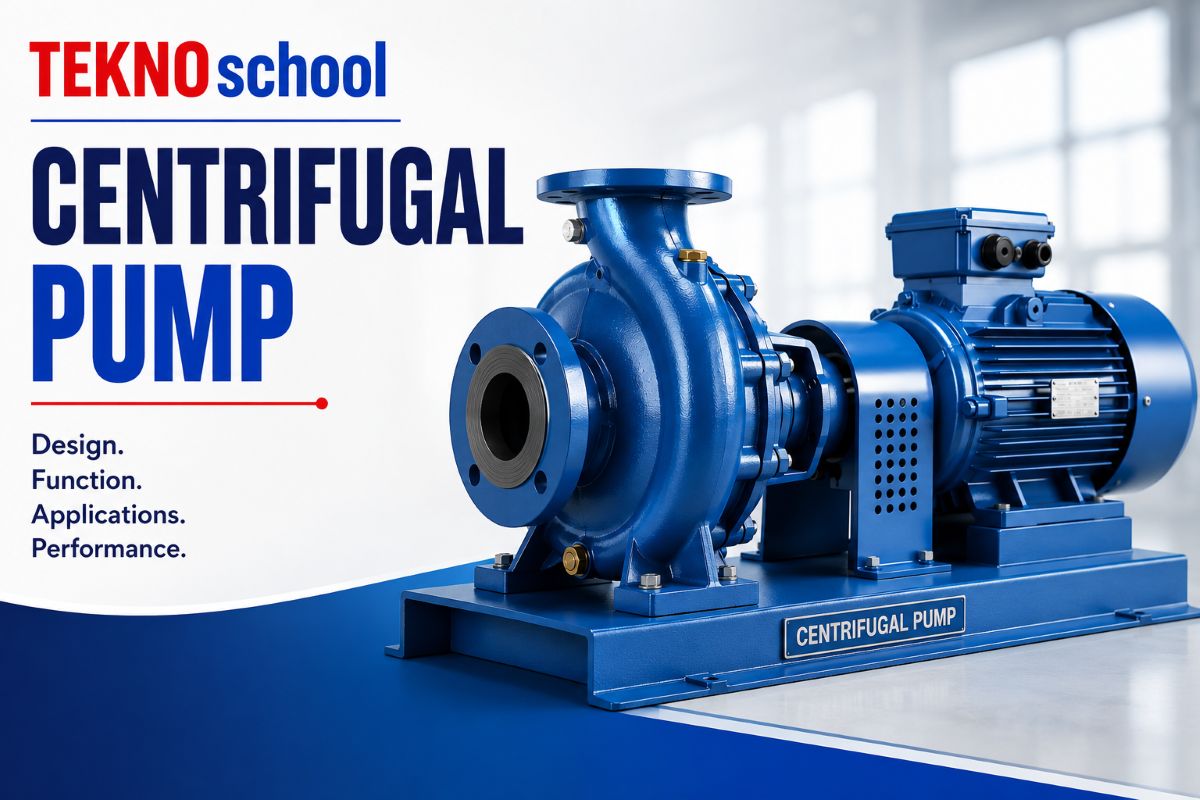
A centrifugal pump converts mechanical energy from a motor or turbine into hydraulic energy by imparting velocity to the fluid, which is then converted into pressure.
Key Components
- Impeller – rotating element that imparts velocity
- Casing – volute or diffuser that converts velocity to pressure
- Suction & Discharge Nozzles – fluid entry and exit
- Shaft & Bearings – transmit power and support rotation
- Mechanical Seal / Gland Packing – prevents leakage
Working Principle
The impeller rotates at high speed, creating a low‑pressure zone at the eye. Fluid enters due to atmospheric or system pressure. As the impeller throws the fluid outward (by centrifugal force), the fluid’s velocity increases. The casing converts this velocity into pressure, delivering fluid at the discharge.
2. Cavitation in Centrifugal Pumps
Cavitation is one of the most destructive phenomena in pumps. It occurs when the pressure at the pump suction drops below the liquid’s vapor pressure, causing vapor bubbles to form. These bubbles collapse violently when they enter higher‑pressure zones, damaging the impeller.
Effects of Cavitation
- Pitting and erosion on impeller vanes
- Vibration and noise (sounds like gravel)
- Reduced flow and head
- Seal and bearing failures
- Reduced pump life
Causes of Cavitation
- High suction lift
- Blocked or undersized suction line
- High fluid temperature
- Low tank level
- Excessive pump speed
- High friction losses in suction piping
3. Net Positive Suction Head (NPSH)
NPSH is the most important parameter for preventing cavitation.
NPSH Available (NPSHa)
The actual pressure head at the pump suction is above the vapor pressure.
NPSHa} = Suction Pressure Head – Vapor Pressure Head -Losses in Suction Line
NPSH Required (NPSHr)
The minimum suction head required by the pump to avoid cavitation, provided by the manufacturer.
Rule
NPSHa must always be greater than NPSHr
If NPSHa < NPSHr → cavitation begins.
4. How to Prevent Cavitation
Preventing cavitation requires maintaining adequate suction pressure and minimizing losses.
Practical Methods
- Increase suction head (raise liquid level)
- Reduce pump speed (VFD control)
- Use larger suction piping
- Minimize bends, elbows, and strainers on the suction side
- Reduce fluid temperature
- Install booster pump if needed
- Ensure NPSHa > NPSHr with margin
Design Best Practices
- Keep the suction line short and straight
- Avoid high‑point air pockets
- Use eccentric reducers (flat on top)
- Maintain flooded suction whenever possible
5. Centrifugal Pump Characteristics
Pump performance is represented by the Pump Characteristic Curve, showing the relationship between Head, Flow, Power, and Efficiency.
a) Head vs Flow Curve (H‑Q Curve)
- Head decreases as flow increases
- Steep curves → stable operation
- Flat curves → risk of hunting and instability
b) Efficiency Curve
- Maximum at Best Efficiency Point (BEP)
- Operating far from BEP increases vibration, wear, and energy consumption
c) Power Curve
- Power increases with flow
- Important for motor sizing
d) NPSHr Curve
- NPSHr increases with flow
- High flow → higher risk of cavitation
Operating Near BEP Ensures
- Lowest vibration
- Maximum seal and bearing life
- Minimum energy consumption
- Stable operation
6. Pump Protection Methods
Centrifugal pumps require protection against abnormal conditions to avoid damage.
a) Dry‑Run Protection
Running without liquid overheats seals and damages the pump.
Protection:
- Flow switch
- Pressure switch
- Motor current monitoring
- Level switch in the suction tank
b) Overload Protection
High flow or mechanical issues increase motor load.
Protection:
- Thermal overload relay
- VFD current limit
- Motor protection circuit breaker
c) Minimum Flow Protection
Low flow causes overheating and recirculation.
Protection:
- Minimum flow bypass line
- Automatic recirculation valve (ARC)
d) Cavitation Protection
- Suction pressure transmitter
- Vibration monitoring
- NPSH margin design
e) Seal & Bearing Protection
- Temperature sensors
- Leakage detection
- Lubrication monitoring
7. Gas Binding in Centrifugal Pumps
Gas binding occurs when air or gas accumulates inside the pump casing, preventing the impeller from imparting energy to the liquid.
Causes
- Air leakage in the suction line
- Low liquid level
- Poor priming
- High points in suction piping
Effects
- Loss of pumping
- Vibration
- Overheating
- Seal failure
Solutions
- Ensure proper priming
- Remove air pockets
- Use air release valves
- Maintain flooded suction
8. Priming of Centrifugal Pumps
Centrifugal pumps cannot pump air; they must be filled with liquid before starting.
Why Priming Is Needed
- An impeller cannot create suction in air
- No pressure difference is generated
- The pump will run dry and damage seals
Priming Methods
- Manual priming (filling casing)
- Foot valve at suction
- Vacuum priming system
- Self‑priming pump design
- Using a separate priming pump
Best Practices
- Always ensure casing is full
- Check the foot valve for leakage
- Avoid suction leaks
9. Applications of Centrifugal Pumps
Centrifugal pumps are used across almost every industry due to their versatility.
Industrial Applications
- Chemical transfer
- Cooling water circulation
- Boiler feed (multistage pumps)
- Condensate extraction
- Firefighting systems
- Oil & gas processing
- Water treatment plants
Utility & Domestic Applications
- Irrigation
- Water supply
- HVAC chilled water
- Pressure boosting
- Drainage and dewatering
Why They Are Preferred
- Simple design
- Low maintenance
- Smooth, non‑pulsating flow
- Suitable for large flow rates
- Wide range of materials and configurations
Conclusion
Centrifugal pumps are essential machines in industrial and utility systems. Understanding cavitation, NPSH, pump characteristics, and protection methods ensures reliable and efficient operation. Proper priming, avoiding gas binding, and operating near the BEP significantly enhance pump life and performance. With correct design and maintenance, centrifugal pumps deliver years of trouble‑free service across diverse applications.