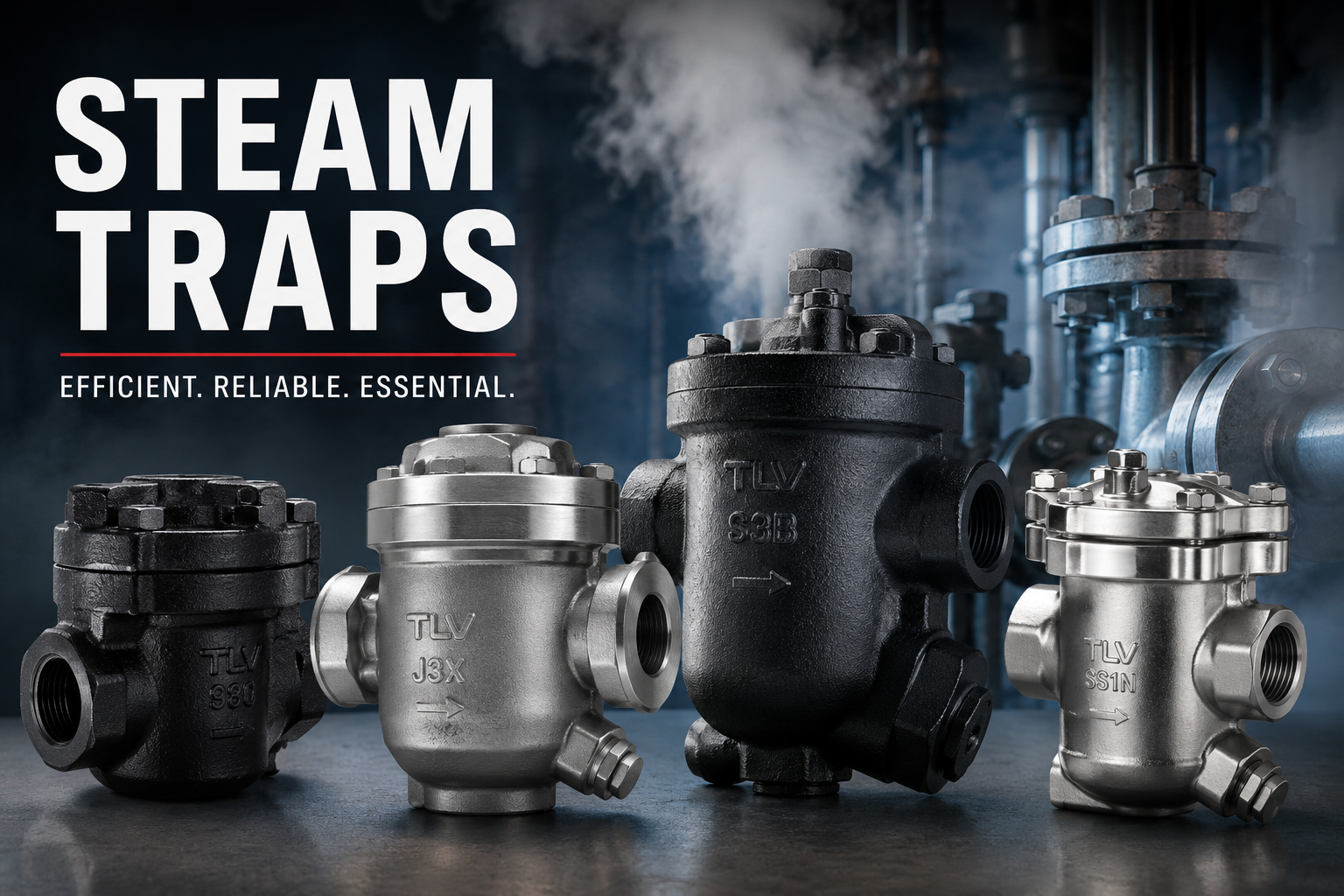
Steam traps
Steam Traps: Working Principles, Types, Construction & Industrial Applications
Steam traps are automatic valves designed to discharge condensate, vent air, and retain live steam inside a steam system. Their performance directly affects energy efficiency, heat transfer, equipment reliability, and overall plant productivity.
Across industries—chemical, refinery, textile, food processing, power plants—steam traps are essential for maintaining dry steam conditions and preventing water hammer, corrosion, and thermal inefficiencies.
This blog explains the working principles, construction, advantages, limitations, and applications of all major steam trap types used in modern plants.
1. Ball Float Steam Trap (Float & Thermostatic Trap – F&T)
Working Principle
A hollow stainless-steel float rises and falls with the condensate level.
- When condensate enters, the float rises → opens valve → drains condensate.
- When steam reaches the trap, the float drops → closes valve → retains steam.
- A thermostatic air vent removes air during startup.
Construction
- Cast iron/steel body
- Stainless steel float
- Lever mechanism
- Thermostatic air vent
- Seat & valve assembly
Advantages
- Continuous discharge at steam temperature
- Excellent for process heating
- Handles large condensate loads
- Not affected by backpressure
Limitations
- Sensitive to water hammer
- Float damage possible
- Not suitable for superheated steam
Applications
- Heat exchangers
- Reactors
- Unit heaters
- Jacketed vessels
- Tracing lines with high condensate load
2. Inverted Bucket Steam Trap
Working Principle
A bucket floats upside down inside the trap.
- Steam entering the bucket makes it buoyant → bucket rises → valve closes.
- Condensate entering reduces buoyancy → bucket sinks → valve opens → condensate discharges.
Construction
- Inverted bucket
- Lever & valve
- Air vent hole on bucket top
- Rugged cast steel body
Advantages
- Very robust
- Excellent for dirty steam
- Tolerates water hammer
- Long service life
Limitations
- Intermittent discharge
- Air binding possible
- Not suitable for varying loads
Applications
- Drip legs
- Main steam lines
- High-pressure steam
- Outdoor installations
3. Thermodynamic Steam Trap
Working Principle
Operates on the Bernoulli principle and the dynamic effect of flash steam.
- Condensate lifts the disc → trap opens → discharges.
- Flash steam forms above the disc → pressure pushes the disc down → trap closes.
Construction
- Hardened stainless-steel disc
- Single moving part
- Wear-resistant seat
- Compact forged body
Advantages
- Very compact
- Works at very high pressure
- Simple & rugged
- Easy maintenance
Limitations
- Noisy operation
- Affected by backpressure
- Not ideal for low-pressure systems
Applications
- Steam tracing
- Drip legs
- High-pressure lines
- Outdoor installations
4. Bimetallic Steam Trap
Working Principle
Uses bimetallic strips that bend with temperature.
- Cold condensate → strips straight → valve open.
- Hot condensate/steam → strips bend → valve closes.
Construction
- Stainless steel bimetallic elements
- Adjustable spring
- Valve & seat
- Welded steel body
Advantages
- Excellent for superheated steam
- High capacity
- Energy-efficient (subcooling possible)
- Resistant to water hammer
Limitations
- Delayed discharge (subcooling)
- Not suitable for precise temperature control
Applications
- Superheated steam lines
- Long steam tracing
- High-pressure applications
- Remote outdoor installations
5. Bellows Type Steam Trap (Thermostatic Trap)
Working Principle
A liquid-filled bellows expands with temperature.
- Cold condensate → bellows contracted → valve open.
- Steam temperature → bellows expands → valve closes.
Construction
- Stainless steel bellows
- Thermostatic charge (alcohol/water mix)
- Valve & seat
- Compact forged body
Advantages
- Excellent air venting
- Opens fully on startup
- Energy-efficient
- Simple design
Limitations
- Not suitable for superheated steam
- Bellows fatigue possible
Applications
- Unit heaters
- Heat exchangers
- Tracing lines
- Sterilizers
6. Impulse Type Steam Trap
Working Principle
Uses pressure impulses generated by flash steam.
- Condensate passes through the orifice → low pressure → valve opens.
- Flash steam creates impulse → pushes piston → valve closes.
Construction
- Piston or diaphragm
- Orifice plate
- Pressure chamber
- Steel body
Advantages
- Good for high pressure
- Few moving parts
- Handles dirty condensate
Limitations
- Sensitive to wear
- Requires clean installation
Applications
- High-pressure drip legs
- Power plants
- Refinery steam lines
7. Orifice Type Steam Trap (Fixed Orifice / Venturi Trap)
Working Principle
A precisely sized orifice allows condensate to pass while restricting steam.
- Condensate (denser) flows easily.
- Steam (lighter) flashes and restricts flow → self-regulating.
Construction
- Hardened steel orifice
- Venturi profile
- No moving parts
- Stainless steel body
Advantages
- Zero moving parts → long life
- No mechanical failure
- Excellent for clean steam
- Energy-efficient
Limitations
- Not suitable for varying loads
- Requires precise sizing
- Not ideal for dirty condensate
Applications
- Clean steam systems
- Food & pharma
- Constant-load heat exchangers
- High-pressure tracing
Comparison Table of Steam Trap Types
| Trap Type | Discharge | Pressure Range | Moving Parts | Best For | Not Suitable For |
|---|---|---|---|---|---|
| Ball Float | Continuous | Low–Medium | Yes | Process heating | Superheated steam |
| Inverted Bucket | Intermittent | Medium–High | Yes | Dirty steam | Air-heavy systems |
| Thermodynamic | Intermittent | High | One | Drip legs, tracing | Low pressure |
| Bimetallic | Delayed | High | Yes | Superheated steam | Precise temp control |
| Bellows | Modulating | Low–Medium | Yes | Air venting | Superheated steam |
| Impulse | Intermittent | High | Few | Power plants | Dirty systems |
| Orifice | Continuous | High | None | Clean steam | Variable loads |
Conclusion
Steam traps are critical for maintaining steam quality, energy efficiency, and equipment reliability. Each trap type has a unique working principle and is suited for specific applications.
Selecting the right trap requires evaluating:
- Condensate load
- Pressure & temperature
- Cleanliness of steam
- Process criticality
- Maintenance philosophy
A well-designed steam trapping system can save 10–20% energy, reduce downtime, and extend equipment life.