Electrical Heat Tracing System: Design, Standards & Industrial Application
Electrical Heat Tracing Systems: Design, Safety, and Industrial Applications
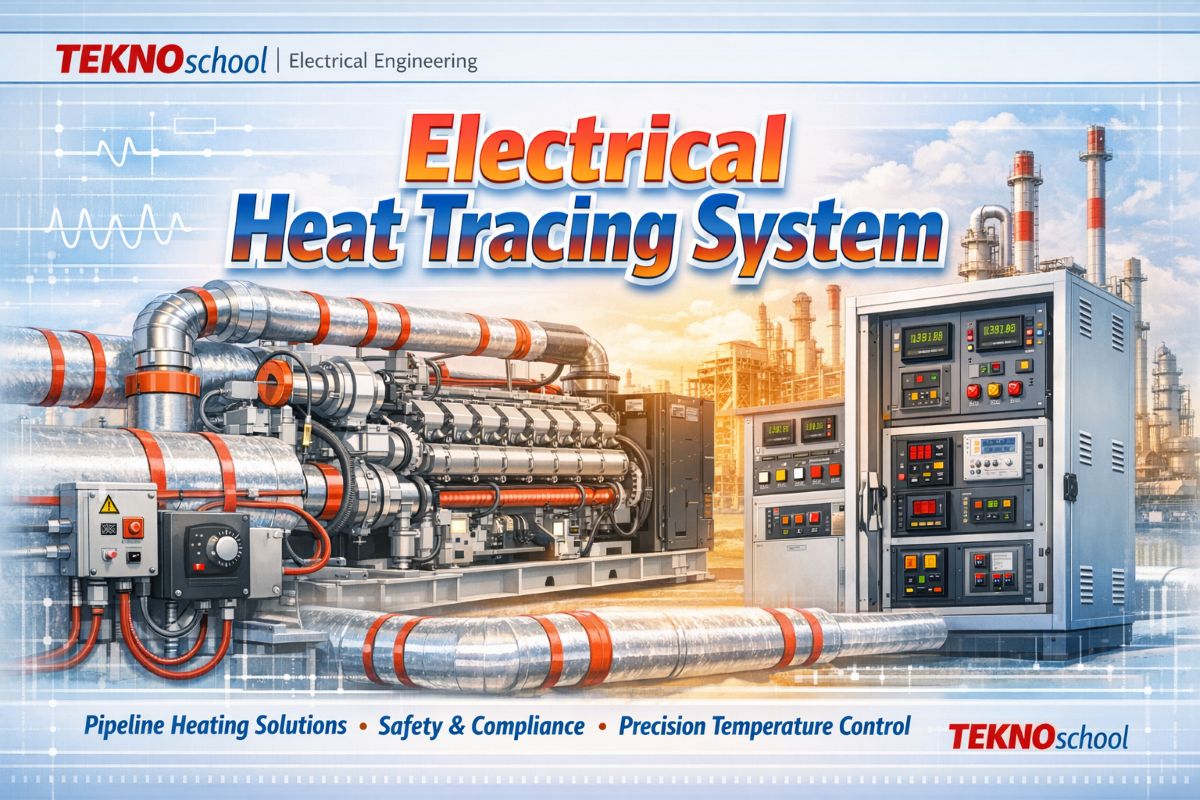
In modern process industries, electrical heat tracing systems play a vital role in maintaining temperature consistency across pipelines, vessels, and equipment. Whether preventing freezing in cold climates or ensuring fluid viscosity for chemical processes, these systems combine precision engineering, safety compliance, and smart control to deliver reliable thermal performance.
This article explores the design philosophy, standards, and practical considerations behind electrical heat tracing systems — from heating tape selection to power distribution and installation — offering engineers a complete understanding of how these systems sustain process integrity.
1. Purpose and Scope
Electrical heat tracing systems are engineered to provide controlled surface heating for pipes, tanks, and instruments carrying fluids or materials that must remain above a specific temperature. They are used in both safe and hazardous areas (Zone‑1 and Zone‑2) and are designed for continuous, reliable service with minimal maintenance.
The system includes heating cables, thermostats, junction boxes, local distribution panels, and control circuits — all integrated to maintain uniform heat and prevent thermal losses.
2. Standards and Compliance
Design and installation must conform to international and national standards to ensure safety and reliability. The most critical reference is IEEE Standard 515, which governs testing, design, installation, and maintenance of electrical resistance heat tracing for industrial applications.
Other applicable codes include:
- Bureau of Indian Standards (BIS)
- Indian Electricity Rules
- Fire insurance and petroleum regulations
- Electrical Inspectorate and local authority guidelines
- TAC and DGMS/DGFASLI regulations
Compliance ensures that every component — from heating tapes to control panels — meets stringent safety and performance criteria.
3. System Design Requirements
3.1 Design Philosophy
The design must prioritise:
- Continuous and reliable operation
- Safety for personnel and equipment
- Ease of maintenance and interchangeability
A stabilised design approach is used to determine the maximum surface temperature of heating devices without thermostatic control, following IEEE 515 guidelines.
For high‑temperature applications (above 200°C), a systems approach may be adopted, allowing flexibility in heater certification while maintaining safety margins.
3.2 Heating Tape Selection
Heating tapes are the core of the system. They must be:
- Burn‑out proof, preventing damage from overlap
- Corrosion‑resistant, with tinned copper braid and outer protective sheath
- Rated for hazardous areas, typically T3 (200°C) unless otherwise specified
Selection depends on ambient temperature, exposure conditions, voltage tolerance, heater output, and site environment. A 10% design margin is added to the calculated heat loss to ensure adequate performance under all conditions.
3.3 Temperature Control
Each heater circuit is controlled by an independent thermostat with manually adjustable set points. Thermostats are strategically located based on process conditions, and capillary tubes are mechanically protected.
Extra heater tape length is provided for valves, flanges, and pipe supports to compensate for heat sinks, ensuring uniform temperature across the system.
4. Electrical Power Distribution
Power supply to heating tapes originates from Local Distribution Panels (LDPs) strategically located near load centres.
Key Design Considerations:
- Voltage drop limited to 3% under full load
- Cable sizing accounts for ambient temperature, soil resistivity, and grouping effects
- Cables must handle startup current at the minimum temperature
- Load balancing across all three phases
Monitoring facilities in LDPs use auxiliary contactors to provide remote alarms for voltage loss, earth leakage, or faults — enhancing system reliability.
5. Equipment and Material Specifications
5.1 Local Distribution Panels
LDPs are metal‑enclosed, compartmentalised, floor‑mounted units suitable for indoor or outdoor installation.
- Fabricated from 14 SWG sheet steel with neoprene gaskets
- Equipped with TPN switch‑fuse incomers, ammeters, pilot lamps, and MCBs with ELCBs (30 mA trip rating)
- Designed for safe operation and easy maintenance
- Flameproof versions (LM‑6 aluminium alloy) for hazardous areas, with IP55 protection and T3 temperature class
5.2 Thermostats
Flameproof, weather‑protected thermostats are used in classified zones. They are factory‑calibrated, non‑indicating, and equipped with internally adjustable set points.
5.3 Junction Boxes and Connectors
- Weatherproof for safe areas
- Flameproof for Zone‑1 installations
- Nickel‑plated brass double‑compression glands for cable terminations
5.4 Cables
PVC‑insulated, armoured cables with copper or aluminium conductors are used for power and control circuits. All enclosures must provide IP55 protection.
5.5 Accessories
Heater tape clamps, connectors, and supports must withstand temperature cycling, thermal expansion, and environmental exposure. Each heater is tagged with a non‑corrosive metallic label indicating type and equipment number.
5.6 Safety Signage
All traced pipelines and equipment carry visible caution signs reading “Electric Surface Heated” every 6 meters and near instruments or valves. This ensures safety awareness during operation and maintenance.
6. Inspection and Testing
All equipment — heater tapes, cables, panels, and accessories — undergoes inspection at the manufacturer’s works.
Testing Requirements:
- Routine tests per IEEE 515 and IS 1554
- Visual checks for dimensions and terminal connections
- Manual and electrical operation tests for switchgear
- Insulation resistance and high‑voltage withstand tests
- Functional checks for control circuits and relays
Test certificates must be submitted before dispatch, and all materials are inspected on site before installation.
7. Installation Guidelines
Proper installation is critical for system performance and safety.
7.1 Heater Tape Installation
- Surfaces must be cleaned before applying heater tapes
- Installation follows IEEE 515 procedures
- Tapes are installed only after the pipelines pass pressure and leak tests
- Heaters and controls are positioned to prevent mechanical damage during operation or maintenance
7.2 Cable Routing
Cables are laid with adequate spacing, mechanical protection, and proper gland sealing. All terminations are accessible from the front of the panels for easy maintenance.
8. Field Testing and Commissioning
After installation, each circuit is tested for:
- Insulation resistance
- Continuity
- Voltage and current verification
- Thermostat calibration
- Alarm and monitoring functionality
Commissioning ensures that the system operates within design parameters and maintains required temperatures under actual process conditions.
9. Certification and Spares
All equipment must carry certification from recognised authorities for hazardous area suitability.
Manufacturers provide recommended spares for two years of normal operation, including heater tapes, thermostats, connectors, and fuses.
10. Packing and Dispatch
Before shipment, all components are cleaned, epoxy‑painted (shade 632 as per IS:5), and securely packed to prevent damage during transport. Documentation includes test certificates, installation manuals, and wiring diagrams.
Conclusion
Electrical heat tracing systems are indispensable in industries where temperature control defines product quality and process safety. By combining advanced materials, precise engineering, and compliance with IEEE 515 standards, these systems ensure reliable heat maintenance across pipelines and equipment — even in the most demanding environments.
For engineers and plant designers, mastering the principles of electrical heat tracing means mastering the art of thermal reliability — where every circuit, thermostat, and heater tape contributes to seamless industrial performance.