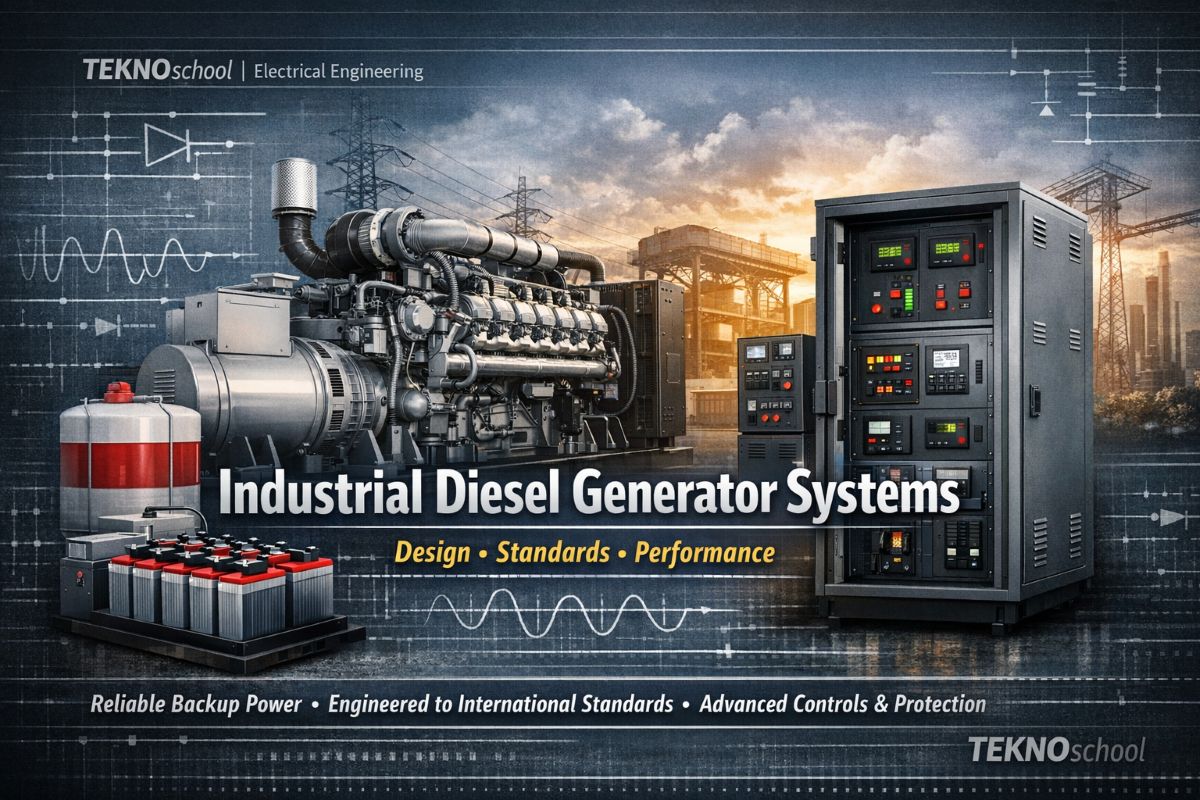
Industrial diesel generator systems
Industrial Diesel Generator Systems: Design, Standards, and Engineering Excellence
In every industrial facility, uninterrupted power supply is not a luxury — it’s a necessity. When grid power fails, the diesel generator steps in as the silent guardian, ensuring that critical operations continue without disruption. Behind this reliability lies meticulous engineering, rigorous standards, and thoughtful integration of mechanical and electrical systems.
This article explores the complete design philosophy, construction, and performance requirements of an industrial diesel generating set — from engine and alternator design to control panels and protection systems — offering engineers and plant managers a clear understanding of what defines a truly dependable DG system.
1. Purpose and Scope
An industrial diesel generator is far more than an engine coupled to an alternator. It’s a self‑contained power plant designed to deliver stable, safe, and efficient electricity under all conditions. A complete system includes:
- Diesel engine
- Alternator
- Base frame and couplings
- Cooling and exhaust systems
- Fuel and lubrication circuits
- Starting and control systems
- Instrumentation and protection panels
Each component must work in harmony to ensure reliable performance at rated load and environmental conditions typical of industrial sites.
2. Standards and Compliance
Modern generator sets are governed by international standards that ensure safety, performance, and interoperability. Key references include:
- IEC 60034 for rotating electrical machines
- BS 4999 for voltage regulation and parallel operation
- BS 5514 for reciprocating internal combustion engines
- IEC 60255 for electrical relays
- ISO 3046 for engine performance and speed governing
- IEC 60529 for enclosure protection (IP ratings)
Compliance with these standards guarantees that the generator meets global benchmarks for efficiency, vibration control, insulation, and electromagnetic compatibility.
3. Engine Design and Construction
The heart of the generator is its diesel engine — typically a four‑stroke, water‑cooled, compression‑ignition unit operating at 1500 rpm. It must deliver consistent torque and speed stability even under fluctuating loads.
Key Features:
- Governor Class A1 with a maximum 3% droop for precise speed control
- Heavy‑duty radiator sized for tropical climates (up to 55°C ambient)
- Thermostatically controlled bypass valve for optimal cooling water temperature
- Flexible exhaust ducting and louvers for efficient heat dissipation
The engine’s design ensures smooth operation, minimal vibration, and long service life even in harsh industrial environments.
4. Air, Exhaust, and Fuel Systems
Air Intake
A robust air filtration system is essential for engine longevity. It includes:
- Pre‑cleaner
- Dry air cleaner with replaceable filter element
- Service indicator for timely maintenance
Exhaust System
The exhaust assembly uses a residential‑type silencer and stainless‑steel flexible fittings to minimize noise and vibration. All indoor exhaust piping is insulated and clad with aluminum to maintain surface temperatures below 60°C — ensuring operator safety and compliance with environmental norms.
Fuel System
The fuel circuit integrates:
- Engine‑mounted fuel filter and pressure gauge
- Day tank with solenoid valve, water drain, inspection hatch, and level switches
- Mechanical level control valve for automatic regulation
This configuration ensures clean fuel delivery, minimal downtime, and safe operation.
5. Lubrication and Bearings
The lubrication system uses a gear‑driven lube oil pump with replaceable filters and an engine‑mounted heat exchanger for oil cooling. Bearings are designed for long intervals between greasing — typically 4000 to 8000 operating hours — and include insulation to prevent stray currents.
Sleeve bearings feature overflow protection to prevent oil accumulation, while rolling‑element bearings include grease nipples and relief devices for easy maintenance.
6. Safety and Starting Systems
Safety shut‑offs protect the engine from damage under abnormal conditions. Automatic shutdowns are triggered by:
- Low lubricating oil pressure
- High water temperature
- Over‑speed
Starting is achieved through a 24V DC electric system with a positive engagement drive. The setup includes:
- Heavy‑duty DC starter motor
- Storage batteries capable of six consecutive starts
- Battery charger with float and boost modes
- DC ammeter, voltmeter, and selector switches
This ensures reliable starting even after long idle periods.
7. Generator and Excitation System
The alternator is a brushless, single‑bearing, salient‑pole, revolving‑field machine with self‑regulating excitation. It’s designed for continuous-rated output with ±5% voltage variation and a 0.8 power factor.
Key Attributes:
- IP65 protection for outdoor installations
- Class F insulation for windings
- Tropicalized and impregnated stator core for high-humidity environments
- Copper conductors for superior conductivity and durability
- Space heaters to prevent condensation when idle
The excitation system includes an Automatic Voltage Regulator (AVR) with fine voltage adjustment, frequency sensing, and current boost circuitry. It maintains voltage stability within 1% from no‑load to full‑load and provides short‑circuit current up to 300% for 3 seconds.
8. Efficiency and Performance
Generator efficiency improves with capacity:
| Rated Output | Minimum Efficiency |
|---|---|
| 50–100 kVA | 90% |
| 125–300 kVA | 91% |
| 330–600 kVA | 92% |
| 630–1250 kVA | 93% |
Guaranteed efficiency values must be provided for 50%, 75%, and 100% load conditions.
Total harmonic distortion (THD) is limited to 1% under open‑circuit conditions and 2–5% under balanced-load conditions, ensuring clean power for sensitive equipment.
9. Control and Protection Equipment
A modern DG set integrates engine and generator control panels with local gauges, meters, and protection relays. These panels may be combined into a single cubicle with clear segregation between engine and generator circuits.
Typical Panel Features:
- Voltage, current, and frequency meters
- Power factor and kWh meters
- Exciter voltage and current meters
- Raise/lower voltage adjuster
- Battery charger and DC distribution
- Alarm and trip annunciation
- Microprocessor‑based protection relays with LED indicators
The control module displays real‑time parameters such as RPM, oil pressure, water temperature, and battery voltage — enabling quick diagnostics and preventive maintenance.
10. Panel Construction and Wiring
Control panels are fabricated from 2 mm sheet steel, providing IP41 protection for indoor use and IP55 for outdoor installations. Internal wiring uses stranded copper conductors sized for current capacity and mechanical strength.
Each panel includes:
- Pad‑lockable disconnecting devices
- Miniature circuit breakers (IEC 60898 compliant)
- Anti‑condensation heaters
- 25% spare terminals and cable entries for future expansion
Compression‑type cable glands and gasketed gland plates ensure safe and secure cable termination.
11. Base Frame and Mounting
The engine and alternator are mounted on a common structural steel base plate designed to withstand transport and lifting forces. Anti‑vibration mounts isolate mechanical vibrations from the foundation, protecting both equipment and surroundings.
For offshore or high‑shock environments, the base frame is reinforced to handle horizontal forces equal to the total transport weight.
12. Reliability and Maintainability
Every design element — from cooling and lubrication to control logic — aims to minimize downtime and simplify maintenance. Recommended spares for two years of operation are supplied with the generator, ensuring quick replacement and sustained performance.
Conclusion
A diesel generator is not just a backup power source; it’s a precision‑engineered system that embodies mechanical strength, electrical stability, and operational intelligence. When designed and maintained according to international standards, it becomes a cornerstone of industrial reliability — ready to deliver power whenever the grid falters.
For engineers and plant operators, understanding these specifications isn’t just about compliance; it’s about mastering the art of dependable energy.