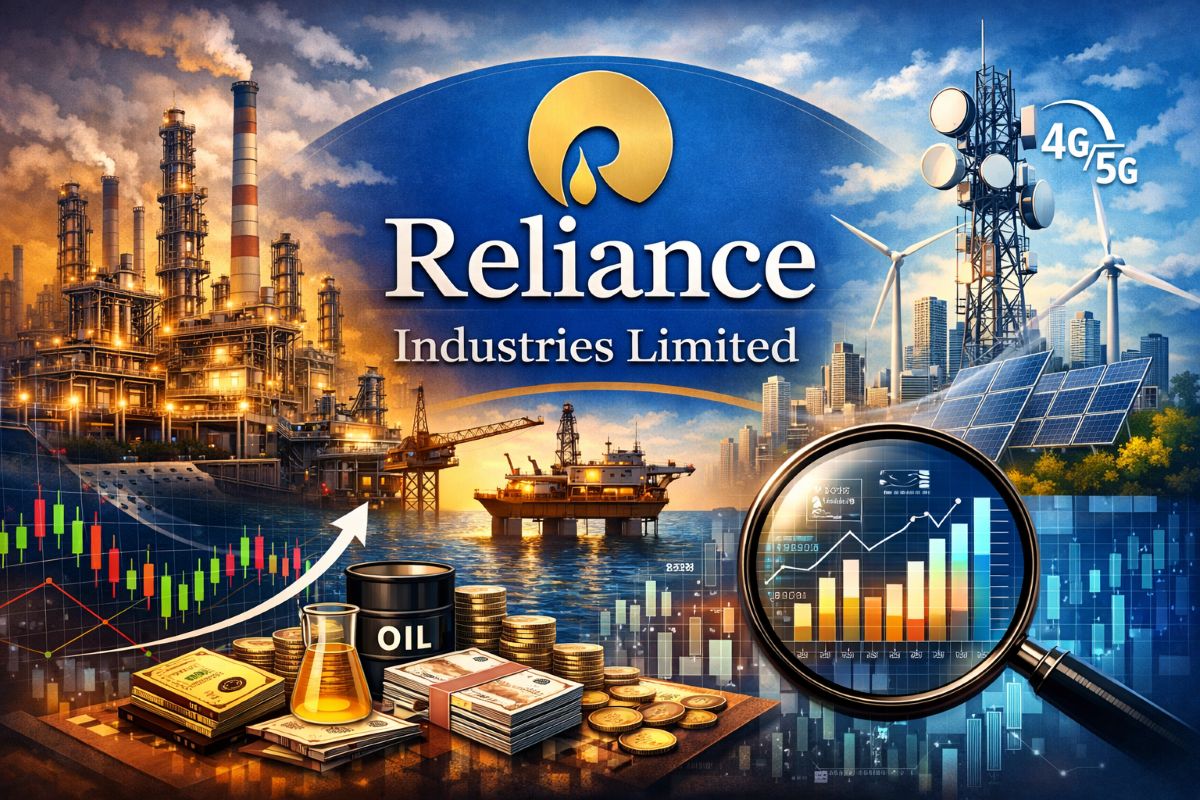
Industry Insight Reliance Industries Limited
Industry Insight Reliance Industries Limited: Inside the World’s Largest Energy & Petrochemical Powerhouse at Jamnagar
1. A Glimpse into the Legacy Behind the Jamnagar Energy Empire
Industry Insight Reliance Industries Limited, Reliance Industries Limited (RIL) has long been recognized as one of India’s most transformative business forces. From textiles to telecom, the company has consistently redefined industries with scale, ambition, and innovation. Yet, among all its achievements, the Jamnagar Refinery & Petrochemical Complex stands out as a monumental symbol of engineering excellence. Established in 1999, this mega‑facility reshaped India’s energy landscape and positioned the country as a global refining hub.
Spread across thousands of acres on the western coast of Gujarat, the Jamnagar complex is the world’s largest integrated refinery, capable of processing over a million barrels of crude oil per day. What makes it extraordinary is not just its size but its ability to convert some of the world’s toughest crude grades into high‑value fuels and petrochemicals. Over the years, Jamnagar has evolved into a sophisticated ecosystem of refineries, petrochemical plants, logistics infrastructure, and export terminals — all operating with remarkable precision.
Today, Jamnagar is more than an industrial site; it is a global benchmark for operational excellence, technological leadership, and sustainable energy management.
2. Core Competencies That Power Reliance’s Energy Ecosystem
Reliance’s energy business is built on a foundation of refining, petrochemicals, and integrated value creation. At Jamnagar, the company processes crude oil into a wide spectrum of fuels, chemical feedstocks, and industrial products. Its ability to handle heavy and ultra‑heavy crude gives it a competitive edge, enabling cost‑efficient operations even during volatile market cycles.
Beyond refining, the complex is deeply integrated with petrochemical production. This integration allows Reliance to convert refinery by‑products into high‑value polymers, aromatics, and specialty chemicals. The synergy between refining and petrochemicals ensures maximum value extraction from every molecule of crude oil.
Reliance also excels in logistics and supply chain management. With its own port, storage terminals, pipelines, and distribution systems, the company ensures seamless movement of raw materials and finished products.
While RIL has diversified into digital services, retail, and new energy, the Jamnagar complex remains the operational heart of its energy ecosystem — powering industries, supporting global supply chains, and driving economic growth.
3. A Deep Dive Into Jamnagar’s Diverse Output Portfolio
The Jamnagar complex produces an extensive range of fuels, chemicals, and industrial materials that serve global markets. Its refining capacity exceeds 1.24 million barrels per day, enabling the production of high‑quality petrol, diesel, aviation turbine fuel (ATF), liquefied petroleum gas (LPG), and marine fuels. These fuels meet stringent international standards and are exported to numerous countries.
On the petrochemical side, Jamnagar houses some of the world’s largest units for producing polypropylene, paraxylene, benzene, toluene, and other aromatics. The Refinery Off‑Gas Cracker (ROGC) — a technological marvel — converts low‑value off‑gases into ethylene and propylene, which are essential building blocks for plastics, fibers, and advanced materials.
The complex also produces petroleum coke, sulfur, and specialty fuels used in fertilizers, metal processing, cement manufacturing, and chemical industries.
Reliance’s integrated approach ensures minimal waste and maximum efficiency. Every output stream is optimized, upgraded, or repurposed to create value. This holistic product ecosystem makes Jamnagar a preferred supplier for global energy companies, petrochemical manufacturers, and industrial consumers.
4. Breakthrough Engineering & Next‑Gen Technologies Driving the Complex
Jamnagar is a showcase of advanced engineering and cutting‑edge technologies. Its ability to process some of the world’s heaviest crude oils is enabled by sophisticated units such as the Fluidized Catalytic Cracker (FCC), Hydrocracker, Delayed Coker, and Alkylation units. These systems convert heavy fractions into lighter, high‑value fuels and petrochemical feedstocks.
The Refinery Off‑Gas Cracker (ROGC) is one of the most innovative technologies deployed at Jamnagar. It captures off‑gases — typically considered low‑value streams — and transforms them into ethylene and propylene. This not only boosts profitability but also enhances energy efficiency and reduces emissions.
Digitalization is deeply embedded in the complex. Thousands of sensors feed real‑time data into advanced control systems. AI‑driven analytics, predictive maintenance tools, and digital twins help optimize operations, reduce downtime, and improve safety.
Reliance’s self‑sufficient design philosophy ensures that the refinery can produce a wide range of fuels and chemicals internally, without relying heavily on external inputs. This flexibility allows the company to adapt quickly to market changes and maximize margins.
From automation to environmental controls, Jamnagar integrates world‑class technologies that set global benchmarks for efficiency and sustainability.
5. Where Jamnagar’s Products Go: Industries, Users & Global Reach
The products manufactured at Jamnagar support a wide range of industries across the world. Fuels such as petrol, diesel, and ATF power transportation networks — from cars and trucks to aircraft and ships. LPG and industrial fuels support manufacturing, commercial operations, and power generation.
Petrochemical products like polypropylene, paraxylene, and benzene are essential raw materials for packaging, textiles, automotive components, electronics, and consumer goods. Manufacturers rely on RIL’s consistent supply to produce everything from plastic containers and fibers to high‑performance materials.
Specialty products such as sulfur and petroleum coke serve fertilizer producers, metal processors, cement manufacturers, and chemical industries.
Jamnagar’s customers include:
- Global petrochemical companies
- International oil traders
- Airlines and shipping companies
- Industrial fuel consumers
- Government and defense sectors
- Packaging, textile, and automotive manufacturers
With its integrated logistics and export infrastructure, Jamnagar ensures timely delivery and reliable supply — strengthening its position as a trusted global partner.
6. Evolving Energy Landscapes & What They Mean for Jamnagar
The global energy sector is undergoing rapid transformation driven by sustainability goals, technological advancements, and shifting demand patterns. While long‑term fuel demand may face pressure due to electric mobility and climate policies, petrochemicals continue to experience strong growth, especially in emerging markets.
Jamnagar is strategically positioned to navigate these shifts. Its ability to process heavy crude gives it a cost advantage, while its integration with petrochemicals aligns with the global trend of maximizing value from each barrel of oil.
In the near term, demand for transportation fuels in developing economies will remain robust. Aviation and shipping sectors are expected to grow steadily, supporting ATF and marine fuel demand. Petrochemicals — particularly polymers and aromatics — will continue to be driven by packaging, construction, healthcare, and consumer goods.
However, the industry also faces challenges:
- Stricter environmental regulations
- Crude price volatility
- Geopolitical uncertainties
- Competition from Middle Eastern mega‑refineries
Reliance’s diversification into renewable energy, hydrogen, and advanced materials indicates a long‑term strategy to balance traditional refining with future‑ready businesses. Jamnagar is expected to evolve into a multi‑energy hub that supports both fossil and clean energy ecosystems.
7. Green Commitments: Environmental Stewardship & Responsible Operations
Sustainability is deeply embedded in Jamnagar’s operational philosophy. The complex incorporates advanced emission‑control technologies such as sulfur recovery units, flare‑gas recovery systems, and low‑NOx burners. These systems help reduce air pollution and ensure compliance with global environmental standards.
Energy efficiency is a major focus. Heat integration systems, cogeneration plants, and optimized process flows reduce energy consumption and carbon intensity. The ROGC unit enhances overall energy utilization by capturing and upgrading off‑gases.
Water conservation is another priority. Jamnagar uses advanced wastewater treatment and recycling systems, minimizing freshwater usage and ensuring responsible discharge.
On the ESG front, Reliance invests heavily in community development — including education, healthcare, infrastructure, and skill development programs around Jamnagar.
The company’s long‑term sustainability roadmap includes renewable energy integration, green hydrogen production, and circular economy initiatives such as plastic recycling. These efforts position RIL as a responsible energy leader committed to environmental and social progress.
8. Digital Reinvention: How Reliance Is Re‑Engineering Its Industrial Future
Reliance has embraced digital transformation across its operations, and Jamnagar is a prime example of this evolution. The complex uses AI‑powered analytics, machine learning models, and predictive maintenance tools to optimize performance and reduce downtime.
Digital twins — virtual replicas of physical assets — allow engineers to simulate scenarios, predict failures, and improve reliability. Real‑time data from thousands of sensors is analyzed in centralized control rooms, enabling precise monitoring and rapid decision‑making.
Automation extends to logistics as well. Port operations, material handling, and supply chain systems are integrated with digital platforms to ensure seamless coordination.
Reliance’s broader digital ecosystem, strengthened by Jio, enhances its technological capabilities. These capabilities are increasingly applied to industrial operations, creating a synergy between digital innovation and manufacturing excellence.
The result is a refinery that is not only massive in scale but also intelligent, adaptive, and future‑ready.
9. World‑Class Operations: Systems, Standards & Performance Culture
Operational excellence is a defining characteristic of the Jamnagar complex. The refinery was built in a record 30 months — a feat that set global benchmarks for project execution.
Reliance follows rigorous maintenance practices, safety protocols, and quality control systems. Continuous improvement programs, employee training, and global collaborations ensure that the refinery stays ahead of industry standards.
Key best practices include:
- Integrated planning across refining and petrochemicals
- High‑efficiency energy systems
- A strong safety culture with zero‑incident goals
- Advanced process control and automation
- Dedicated port and logistics infrastructure for supply chain optimization
Jamnagar’s self‑sufficient design enhances flexibility and resilience, enabling the complex to operate efficiently even during market disruptions.
10. Proven Digital Technologies in Action at Jamnagar
While many global refineries speak about digital transformation, the Jamnagar complex stands out because its adoption of AI, machine learning, and digital twins is real, documented, and already delivering measurable results. Several global technology leaders — including AVEVA, AspenTech, and Honeywell — have publicly highlighted their collaboration with Reliance Industries Limited (RIL), confirming the use of advanced digital systems across the Jamnagar ecosystem.
Digital Twin Deployment
Reliance has partnered with AVEVA to deploy industrial digital twins across its refining and petrochemical operations. These virtual replicas help engineers simulate plant behavior, optimize shutdown planning, and improve asset lifecycle management.
Machine Learning for Predictive Maintenance
Reliance uses AspenTech’s Aspen Mtell, a machine‑learning‑based predictive maintenance system that detects anomalies in pumps, compressors, and heat exchangers — often weeks before failure.
AI‑Driven Process Optimization
Reliance uses Honeywell’s Advanced Process Control (APC) and Honeywell Forge to optimize crude distillation, improve FCC yields, and reduce energy consumption.
Unified Digital Operations Platform
Reliance is developing a unified digital platform that integrates operations, maintenance, planning, engineering, and supply chain — eliminating silos and enabling seamless data flow.
Technology Comparison Table: Digital Systems Used at Jamnagar
| Technology / System | Provider | Purpose | Use at Jamnagar |
|---|---|---|---|
| Industrial Digital Twin | AVEVA | Virtual modeling of refinery assets | Used for simulation, operator training, shutdown planning, and asset lifecycle optimization |
| Predictive Maintenance (ML‑Driven) | AspenTech (Aspen Mtell) | Machine learning to predict equipment failures | Detects anomalies in pumps, compressors, heat exchangers; reduces unplanned downtime |
| Process Simulation Twins | AspenTech (HYSYS, PetroSIM) | Real‑time process modeling | Supports troubleshooting, optimization, and process improvement |
| Advanced Process Control (APC) | Honeywell | AI‑based optimization of refining units | Improves yields, reduces energy use, stabilizes operations |
| Unified Digital Operations Platform | RIL + partners | Integrates all plant functions digitally | Streamlines workflows, automates tasks, enhances collaboration |
| IoT‑Based Real‑Time Monitoring | RIL + Honeywell + AVEVA | Sensor‑driven data collection | Enables real‑time visibility of refinery performance |
| AI‑Driven Analytics | Jio Platforms + RIL | Big‑data analytics for decision‑making | Used for optimization, forecasting, and operational insights |
11. The Road Ahead: Jamnagar’s Strategic Evolution Over the Next Decade
Over the next 5–10 years, the Jamnagar complex is expected to undergo significant transformation as Reliance pivots toward new energy and advanced materials. The refinery will likely integrate green hydrogen production, carbon capture technologies, and renewable energy systems to reduce its carbon footprint.
Petrochemical capacity is expected to expand further, driven by global demand for polymers, specialty chemicals, and advanced materials. Jamnagar may evolve into a hybrid energy‑petrochemical hub, balancing traditional refining with sustainable energy solutions.
Digitalization will deepen, with AI, robotics, and automation playing even larger roles in operations, maintenance, and logistics.
Reliance may also explore circular economy initiatives such as chemical recycling of plastics and bio‑based feedstocks.
Overall, Jamnagar’s future will be defined by innovation, sustainability, and strategic diversification — ensuring its continued leadership in the global energy landscape.
12. Closing Thoughts: Jamnagar’s Enduring Impact on Global Energy
The Reliance Jamnagar Refinery & Petrochemical Complex is a testament to India’s engineering capabilities, industrial ambition, and global competitiveness. From its unmatched scale to its technological sophistication and sustainability initiatives, Jamnagar stands as a benchmark for the global refining industry.
As the world transitions toward cleaner energy and advanced materials, the complex is poised to evolve, innovate, and lead. Backed by Reliance’s vision and commitment to excellence, Jamnagar will continue shaping the future of energy and petrochemicals for decades to come.