
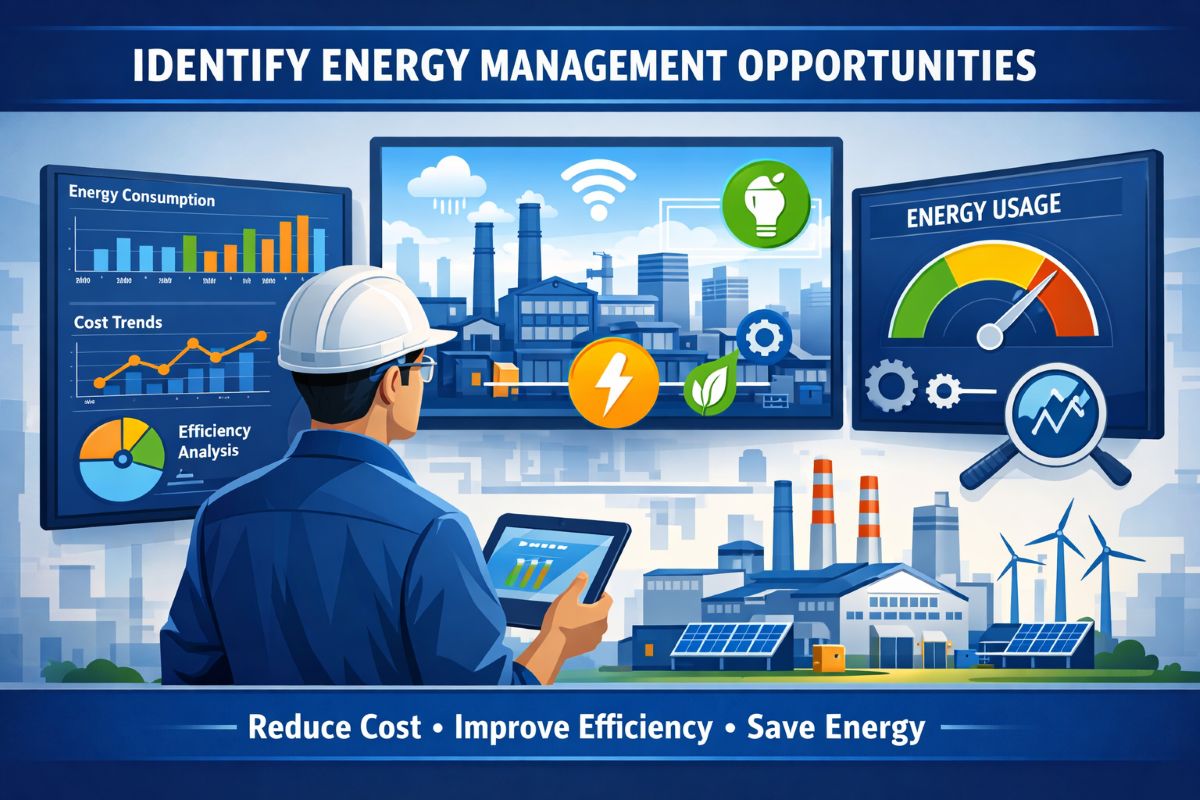
Identify Energy Management Opportunities
⚡ Identify Energy Management Opportunities (EMOs)
Identifying Energy Management Opportunities (EMOs) is one of the most critical stages in an energy audit process.
After analyzing energy consumption patterns, profiling usage, and conducting a detailed inventory, the next logical
step is to pinpoint where energy is being wasted and how it can be optimized. This stage transforms data into
actionable insights that can significantly reduce energy costs and improve operational efficiency.
📌 What Are Energy Management Opportunities?
Energy Management Opportunities (EMOs) refer to practical measures—both operational and technological—that help
reduce energy consumption without compromising production or performance. These opportunities can range from simple
no-cost improvements to capital-intensive upgrades.
- 🔍 Reducing energy wastage
- ⚙️ Improving equipment efficiency
- 📊 Optimizing operational practices
- 💰 Lowering energy costs
- 🌱 Reducing environmental impact
🛠️ Three-Step Approach to Identify EMOs
According to the energy audit methodology, identifying EMOs follows a structured three-step approach. This ensures
that opportunities are not missed and are evaluated systematically.
1️⃣ Identify Areas of Energy Loss
The first step is to locate where energy losses are occurring within the system. These losses may be visible or hidden
and often arise due to inefficiencies in equipment, poor maintenance, or outdated practices.
- 🔥 Heat losses from boilers, furnaces, and pipelines
- 💨 Compressed air leaks and pressure drops
- 💡 Inefficient lighting systems
- ⚡ Idle running equipment consuming unnecessary power
- ❄️ HVAC systems operating beyond required levels
Energy auditors typically use data from condition surveys, energy profiles, and equipment inventories to identify
these losses accurately.
2️⃣ Analyze Causes of Inefficiency
Once losses are identified, the next step is to determine their root causes. Understanding why energy is wasted is
essential for selecting the right corrective measures.
- 🔧 Poor maintenance or equipment degradation
- ⚙️ Improper system design or sizing
- 📉 Inefficient operating practices
- ⏱️ Equipment running during non-productive hours
- 🌡️ Lack of proper controls and automation
For example, a boiler may consume excess fuel due to improper air-fuel ratio control, or a motor may operate
inefficiently due to overloading or underloading conditions.
3️⃣ Develop Practical Solutions
After identifying and analyzing inefficiencies, suitable solutions are developed. These solutions must be technically
feasible, economically viable, and operationally practical.
- 🔄 Process optimization and scheduling improvements
- ⚡ Installation of energy-efficient equipment
- 📊 Automation and control system upgrades
- 🧰 Preventive maintenance programs
- 🌿 Adoption of renewable energy sources
Each proposed EMO should clearly define expected savings, implementation requirements, and potential risks.
🏭 Types of Energy Management Opportunities
🔹 Operational Improvements (No/Low Cost)
- 🕒 Switching off idle equipment
- 📉 Load management and scheduling
- 🔧 Regular maintenance and cleaning
- 🌡️ Optimizing temperature and pressure settings
These opportunities typically require minimal investment and offer quick returns.
🔹 Equipment Upgrades (Medium Investment)
- ⚡ High-efficiency motors and drives
- 💡 LED lighting systems
- ❄️ Energy-efficient HVAC systems
- 🔄 Variable Frequency Drives (VFDs)
Such improvements involve moderate costs but provide substantial long-term savings.
🔹 Capital-Intensive Projects
- 🔥 Waste heat recovery systems
- 🌞 Solar power installations
- 🏭 Process redesign for energy optimization
- 🔋 Cogeneration (Combined Heat and Power)
These projects require detailed feasibility analysis but deliver high energy savings over time.
⚙️ Special Considerations for Process Systems
Process systems often consume the majority of energy in industrial facilities. Identifying EMOs in these systems
requires deeper analysis and technical expertise.
- 🔍 Evaluate process integration opportunities
- 🔥 Optimize heat exchange between processes
- ⚡ Reduce energy-intensive steps
- 📊 Use advanced monitoring and control systems
Process optimization can significantly improve overall plant efficiency and reduce operational costs.
📊 Prioritizing Energy Opportunities
Not all EMOs should be implemented immediately. Prioritization is necessary based on feasibility, cost, and impact.
- 🚀 High savings + low cost → Immediate implementation
- 📈 High savings + high cost → Detailed analysis required
- ⚖️ Moderate savings → Evaluate based on ROI
- ⛔ Low savings → Consider later or discard
This prioritization ensures efficient use of resources and maximizes returns from energy-saving initiatives.
💰 Benefits of Identifying EMOs
- 💵 Significant reduction in energy costs
- 📊 Improved system efficiency and performance
- 🌱 Reduced carbon footprint and environmental impact
- ⚙️ Enhanced equipment life and reliability
- 🏭 Better productivity and operational control
Organizations that actively identify and implement EMOs gain a competitive advantage through reduced operational
expenses and improved sustainability.
📌 Key Takeaways
- ✔️ EMOs are the core outcome of an energy audit
- ✔️ A structured three-step approach ensures effective identification
- ✔️ Opportunities range from simple operational changes to major investments
- ✔️ Proper prioritization maximizes benefits
- ✔️ Continuous monitoring ensures sustained energy savings
🚀 Conclusion
Identifying Energy Management Opportunities is not just a technical exercise—it is a strategic process that enables
industries to optimize energy usage, reduce costs, and enhance sustainability. By systematically analyzing energy
flows, identifying inefficiencies, and implementing targeted solutions, organizations can unlock significant value
from their energy management programs.
A well-executed EMO strategy ensures that energy is used efficiently, waste is minimized, and operational excellence
is achieved. As industries continue to face rising energy costs and environmental challenges, the importance of
identifying and implementing EMOs will only grow stronger.