HV Cable
High‑Voltage (HV) Cables: Types, Construction & Applications
High‑voltage (HV) cables are the backbone of modern electrical infrastructure. They carry large amounts of power safely and efficiently across industrial plants, utility networks, renewable energy installations, and urban grids. Designed to withstand high electrical stress, harsh environments, and mechanical loads, HV cables combine advanced materials with engineered construction to ensure long‑term reliability.
This article explores the types, construction, and applications of HV cables, offering a clear understanding suitable for engineers, students, and professionals in the electrical field.
⚙️ 1. What Are High‑Voltage Cables?
HV cables are specialized power cables used for voltages typically above 1 kV and commonly up to 33 kV, 66 kV, 132 kV, and beyond. They are used where overhead lines are impractical or unsafe—such as underground networks, industrial plants, tunnels, and densely populated areas.
Their design ensures:
- High dielectric strength
- Low power loss
- Mechanical robustness
- Resistance to heat, moisture, and chemicals
- Safe operation under fault conditions
🧩 2. Construction of a Typical HV Cable
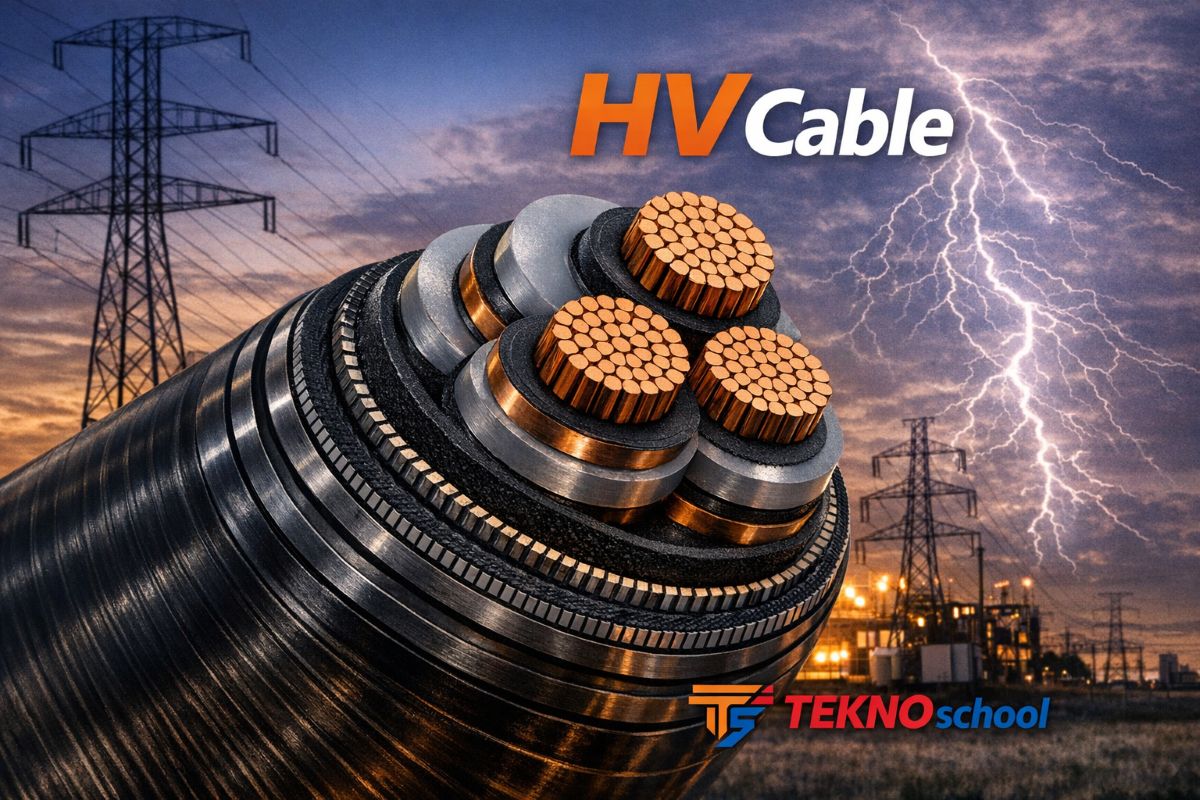
Although designs vary by manufacturer and voltage class, most HV cables share a similar multi‑layered structure. Each layer plays a critical role in electrical performance and mechanical protection.
2.1 Conductor
The conductor carries the electrical current.
Typical materials:
- Aluminum (lightweight, economical, corrosion‑resistant)
- Copper (higher conductivity, used in premium applications)
Conductors are usually stranded to improve flexibility and reduce skin effect.
2.2 Conductor Screen
A semi‑conducting layer is applied over the conductor to smooth the electric field and prevent stress points.
2.3 Insulation
The insulation is the heart of an HV cable.
Common insulation types:
- XLPE (Cross‑Linked Polyethylene) – the most widely used today
- EPR (Ethylene Propylene Rubber)
- PVC (for lower voltage auxiliary layers)
XLPE is preferred for its:
- High dielectric strength
- Thermal stability
- Low dielectric loss
- Long service life
2.4 Insulation Screen
A semi‑conducting layer over the insulation to maintain uniform electric stress and ensure proper bonding with the metallic screen.
2.5 Metallic Screen
Typically made of:
- Copper tape
- Copper wires
- Aluminum wires
This layer provides:
- A return path for fault currents
- Shielding against electromagnetic interference
- Protection against partial discharge
2.6 Inner Sheath
A protective layer—usually extruded PVC—that binds the cores and provides mechanical protection.
2.7 Armoring
Armoring protects the cable from mechanical damage, rodents, and impact.
Typical armoring types:
- Steel Wire Armour (SWA) – for single‑core cables
- Steel Tape Armour (STA) – for multi‑core cables
2.8 Outer Sheath
The final protective layer, usually PVC or HDPE, offering:
- UV resistance
- Moisture protection
- Chemical resistance
- Abrasion protection
🔌 3. Types of HV Cables
HV cables can be categorized based on insulation, construction, and application.
3.1 XLPE‑Insulated HV Cables
The industry standard today.
Advantages:
- High current‑carrying capacity
- Lightweight and compact
- Maintenance‑free
- Suitable for underground and overhead use
- Environmentally safe (no oil leakage)
3.2 Oil‑Filled HV Cables
Used in older transmission systems.
They contain oil to maintain dielectric strength.
Disadvantages include:
- High maintenance
- Risk of leakage
- Complex installation
3.3 Gas‑Insulated Cables
Filled with pressurized nitrogen or SF₆ gas.
Used for very high voltages and special installations.
3.4 Aerial Bundled HV Cables
Used in overhead distribution networks where space is limited.
They have reinforced insulation and are safer than bare conductors.
🏭 4. Applications of HV Cables
HV cables are used across a wide range of industries and infrastructure systems.
4.1 Industrial Plants
HV cables supply power to:
- Motors
- Compressors
- Pumps
- Furnaces
- Substations
Industries such as chemicals, steel, cement, and oil & gas rely heavily on 6.6 kV and 11 kV cable networks.
4.2 Utility Power Distribution
Used for underground feeders in:
- Cities
- Residential zones
- Commercial complexes
They improve aesthetics and reduce outage risks from storms or accidents.
4.3 Renewable Energy
Solar farms and wind parks use HV cables to connect:
- Inverters
- Transformers
- Grid substations
XLPE cables are preferred for their thermal endurance and moisture resistance.
4.4 Transportation Infrastructure
HV cables power:
- Metro rail systems
- Airports
- Tunnels
- Rail electrification networks
Their compact design suits confined spaces.
4.5 Submarine and Underground Transmission
Special HV and HVDC cables are used for:
- Undersea power links
- Inter‑island connections
- Long‑distance underground transmission
These cables are engineered for extreme mechanical and environmental conditions.
🧠 5. Key Factors in Selecting HV Cables
Engineers consider several parameters:
- Voltage rating
- Current‑carrying capacity
- Short‑circuit withstand
- Installation environment (soil, ducts, trays, tunnels)
- Earthing system
- Mechanical protection needs
- Compliance with IS/IEC standards
Proper selection ensures safety, reliability, and long service life.
🏁 Conclusion
High‑voltage cables are essential components of modern power systems. Their layered construction—combining aluminum or copper conductors, XLPE insulation, metallic screens, armoring, and protective sheaths—ensures safe and efficient power transmission even under demanding conditions. Whether used in industrial plants, renewable energy systems, or urban distribution networks, HV cables deliver the reliability and performance required for today’s energy‑intensive world.