Preparing for an Energy Audit
🧭 Preparing for an Energy Audit: How to Build a Strong Audit Plan for Industrial Success
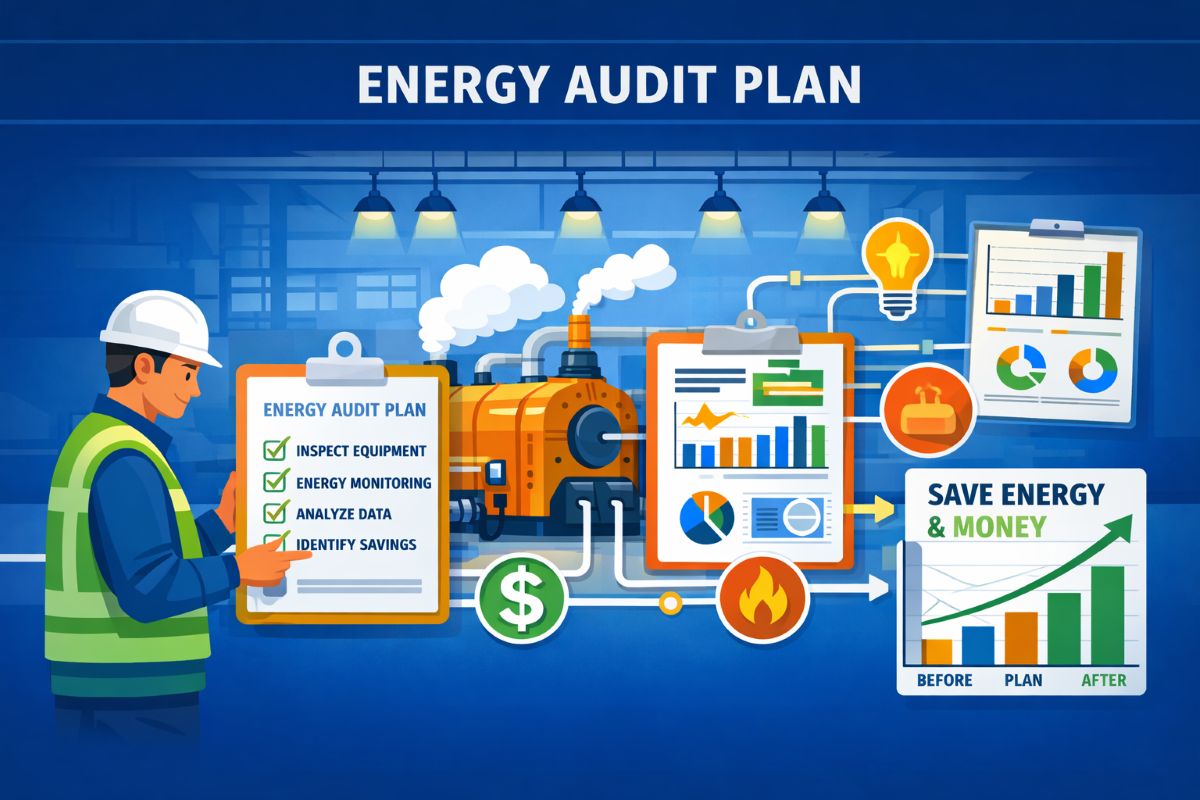
An energy audit does not begin with a meter reading, a spreadsheet, or a plant walkdown. It begins with preparation. 🏭✨Energy Audit Plan. If the preparation stage is weak, even the most technically skilled audit team can end up collecting the wrong data, missing key systems, or producing a report that nobody acts on.
That is why preparing for the audit is one of the most important stages in the entire energy management journey. Before you inspect equipment, review bills, or identify savings opportunities, you must first build a solid foundation. This means creating an audit plan, coordinating with plant departments, and defining the right resources for the work ahead.
In this blog, we will explore how to prepare properly for an industrial energy audit so that your effort becomes organized, credible, and action-oriented. If the earlier blog explained what an energy audit is, this blog explains how to get ready for one the right way. 🚀
🎯 Why Audit Preparation Matters So Much
Many industrial teams are eager to jump straight into field observations and energy calculations. That is understandable. Engineers and plant professionals naturally like action. But without preparation, audit work can become fragmented, repetitive, and inefficient. ⚠️
A well-prepared audit ensures that:
The purpose of the audit is understood clearly
The scope and boundaries are known before work begins
The right departments are involved at the right time
The required people, records, and tools are available
The final report becomes more accurate, useful, and acceptable to management
In simple words, preparation converts an audit from a random inspection into a systematic professional exercise. It keeps everyone aligned and reduces confusion throughout the process.
Think of it like a plant shutdown job. If planning is weak, execution suffers. The same rule applies here. 🛠️
🗂️ What Does “Preparing for the Audit” Actually Mean?
Preparing for the audit is not just one task. It is a structured set of activities that gives direction to the whole energy assessment. In practical terms, this preparation stage focuses on three major areas:
Developing an audit plan
Coordinating with plant departments
Defining audit resources
These three pillars may sound simple, but together they determine whether the audit will be smooth or stressful, effective or superficial.
When done correctly, this stage answers practical questions such as:
Why are we doing this audit?
Which systems will be covered?
Who needs to participate?
When will activities happen?
What information must be collected?
Who will conduct the audit?
How will the final results be communicated?
These are not minor administrative questions. They shape the quality of the entire audit. ✅
📝 Developing an Audit Plan: Your Roadmap Before the Walkthrough
The first major task in preparation is to create an audit plan. An audit plan is a working document that outlines the strategy, timing, priorities, and structure of the audit. It acts like a roadmap for the entire journey.
A good audit plan is not static. It should be well-defined, but flexible enough to adapt if unexpected information appears or if plant conditions change. That is why it is often described as a “living document.”
🌟 What Makes an Audit Plan So Valuable?
An audit plan is much more than a schedule. It is also a communication tool. It helps ensure that the audit is:
Consistent
Complete
Efficient
Resource-conscious
Without a written plan, different people may assume different objectives. One team may focus on boilers, another on electrical demand, while management may be expecting only a cost review. A proper plan removes this ambiguity.
📌 What Should an Audit Plan Include?
A practical audit plan should clearly define the following elements:
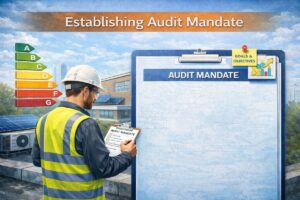
The audit mandate and scope
When and where the audit will be conducted
The organizational and functional units to be audited
Contact details of the people connected to those units
The high-priority elements of the audit
The timetable for major activities
The names of the audit team members
The format of the audit report
What the report will contain
The deadlines for completion and distribution
This list may look administrative at first glance, but each point has operational significance. For example, if the timing is not agreed in advance, the audit team may arrive during a maintenance shutdown, low production, or abnormal operating conditions. That would distort the findings. 📉
Similarly, if report expectations are not discussed early, the final output may be too technical for management or too general for engineers. Preparation prevents these mismatches.
⏳ Why Flexibility in the Audit Plan Is Essential
Industrial facilities are dynamic places. Production schedules change, breakdowns happen, utilities fluctuate, and priorities shift. That is why an audit plan must be disciplined but flexible.
For example:
A compressor trip may temporarily change the load pattern
A production line may be stopped for cleaning or maintenance
A key department manager may be unavailable on the original audit date
An unexpected utility issue may demand urgent plant attention
If your audit plan is too rigid, these normal realities can derail the entire exercise. If it is flexible, the team can adjust intelligently without losing direction. 🔄
The best approach is to prepare thoroughly, but allow controlled modification as the audit progresses.
🤝 Coordinating With Plant Departments: The Human Side of Audit Success
An energy audit is never a one-person exercise. Even when a single auditor leads the work, success depends heavily on cooperation from multiple departments.
Production, maintenance, engineering, utilities, safety, operations, and administration all hold pieces of the energy puzzle. If they are not informed, included, and aligned, the audit becomes harder, slower, and less accurate.
🏭 Why Coordination Is Critical
Good coordination with departments is essential because the audit depends on:
Access to equipment and plant areas
Availability of operating records
Support for measurements and inspections
Clarification of process conditions
Validation of operating practices
Cooperation during the implementation of recommendations
A department that feels excluded may see the audit as interference. A department that is engaged early is more likely to support the process and trust the results.
👥 The Importance of an Initial Meeting
A strong initial meeting with representatives from the relevant plant departments can create confidence in the audit process and set the right tone from the beginning.
This meeting should be used to:
Review the purpose, objectives, and scope of the audit
Discuss and refine the audit plan
Explain the audit methodology
Define communication channels
Confirm the availability of resources and facilities
Confirm the schedule of important meetings, including the closing meeting
Inform the audit team about health, safety, and emergency procedures
Answer questions and remove doubts
This is not just a formal kickoff meeting. It is where trust begins. ✅
When departments understand the purpose of the audit, they are less likely to resist it. They are also more likely to contribute practical insights, such as hidden operating constraints, equipment history, or shift-based energy issues that are not obvious from documents alone.
💬 Building Comfort and Confidence Among Teams
One of the most overlooked aspects of audit preparation is emotional readiness. People must feel comfortable with the process. The preparation stage should therefore ensure that everyone is familiar with the audit’s purposes, expected outcomes, and their own role in the exercise.
This is especially important in industrial settings where audits are sometimes misunderstood as inspections meant to blame operators or departments. In reality, an energy audit should be positioned as a performance improvement tool, not a fault-finding exercise. 🌱
When teams feel respected and involved:
They share better information
They point out hidden issues honestly
They support recommendations more willingly
They take ownership of improvements later
That is why communication is not a soft extra — it is a technical requirement for successful auditing.
👨🔧 Creating an Audit Team: A Smart Option
Another effective strategy is to form an audit team at the beginning of the process. This team can help not only with planning but also with coordination, information collection, and support throughout the audit.
An audit team approach offers several benefits:
It brings cross-functional knowledge into one place
It increases internal ownership
It improves access to data and people
It helps build long-term organizational learning
It strengthens support for implementation after the audit is complete
For example, a good energy audit team may include people from:
Utilities or boiler operations 🔥
Electrical maintenance ⚡
Production 🏭
Mechanical maintenance 🔧
Instrumentation and control 🎛️
EHS or safety 🦺
Finance or cost control 💰
Such a team helps ensure that the audit reflects reality, not just theory.
🧰 Defining Audit Resources: Who Will Do the Audit?
The third major part of preparation is deciding what resources will be used and who will actually conduct the audit. This decision must be made early because the auditor should be involved from the beginning in determining scope, criteria, and planning details.
The guide emphasizes that the auditor may be one person or an entire team, depending on the situation. But whoever leads the work must be competent and familiar with energy auditing techniques and processes.
🔍 In-House Expertise or Outside Consultant?
This is one of the most practical decisions in audit preparation. There are two main options:
Use internal expertise
Hire an external consultant
Each has advantages.
🟢 Internal Audit Approach
An internal team understands the plant deeply. They know the process history, operating patterns, utility problems, and maintenance realities. This makes them highly effective for broad internal audits and operational opportunity identification.
Internal teams also build lasting capability. After the audit, that knowledge remains within the company. 📘
🔵 External Consultant Approach
An external consultant can bring independence, fresh perspective, and specialist analytical skills. This can be especially valuable when:
The plant has complex systems
Internal expertise is limited
The audit requires an advanced engineering assessment
Management wants an independent view
The best choice depends on the plant’s complexity, available internal capability, and audit objectives.
⚖️ What Makes an Auditor Credible?
Whether you choose an internal or external auditor, credibility matters. The audit findings must be trusted by management and plant teams alike. For that to happen, the auditor should be:
Independent of the activities being audited
Free from personal bias
Known for integrity and objectivity
Careful and professional in the work performed
This point is extremely important. If the auditor is seen as protecting one department, pushing a personal agenda, or ignoring facts that affect production, the audit loses credibility. Once confidence is lost, implementation becomes difficult.
The ideal auditor should not let conclusions be influenced by production pressure, departmental politics, or business-unit sensitivities. In some cases, using a consultant or staff from another business unit helps preserve neutrality.
🦺 Never Ignore Safety During Audit Preparation
Although this focuses mainly on planning and coordination, one practical point stands out clearly: the audit team must be informed of health, safety, and emergency procedures before beginning the audit.
This is essential in industrial plants where auditors may enter areas with:
Rotating equipment
Steam lines
Chemical systems
Electrical hazards
Confined spaces
High-temperature surfaces
Vehicle movement and lifting activity
An energy audit must never compromise safety. In fact, good preparation integrates technical objectives with site safety discipline. Safety briefing is not a formality — it is a non-negotiable requirement. 🦺✅
📊 What Good Preparation Looks Like in Practice
Let us turn the theory into a practical picture. A well-prepared energy audit in an industrial plant might begin like this:
Management defines the objective — reduce energy cost and identify top energy losses
A preliminary audit plan is drafted with scope, timeline, and key departments
A kickoff meeting is held with production, maintenance, utilities, and safety
Contact persons are assigned for each audit area
Historical energy bills and process data are collected in advance
Audit dates are aligned with normal operating conditions
Safety requirements are communicated to the team
The expected report format and delivery date are agreed beforehand
This kind of preparation saves time later and creates a much stronger base for technical analysis. 📈
🌟 Final Thought: Preparation Is the First Energy-Saving Step
Many people think energy savings begin when inefficiencies are found in the field. In reality, the first saving often begins in the preparation stage itself. Why? Good preparation prevents wasted effort, duplicated work, wrong assumptions, and weak recommendations. 💡
A well-prepared audit has clarity, cooperation, credibility, and direction. It respects both engineering rigor and organizational reality. It brings the right people together, asks the right questions early, and sets the stage for meaningful results.
So before you inspect a steam trap, log a motor load, or benchmark your kWh per tonne, pause and prepare properly. That single step can determine whether your audit becomes a paper exercise — or a powerful driver of industrial improvement. 🚀
✅ Key Lessons
Preparation is not optional — it is the foundation of audit quality
A strong audit plan makes the work structured and efficient
The plan should be clear but flexible
Good departmental coordination builds trust and improves access to data
An initial meeting helps align expectations and responsibilities
Defining the right audit resources early prevents confusion later
The auditor must be competent, objective, and credible
Safety communication is essential before any plant audit begins
💬 Ready for the Next Step?
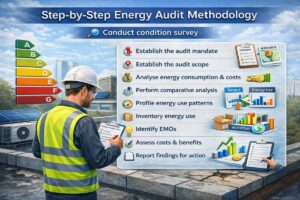
Once the audit is properly prepared, the next logical stage is to move into the actual audit methodology and begin structured execution across the plant. That is where theory turns into action. ⚙️