Connected Applications in Manufacturing: How Digital Integration Transforms Modern Industries
🔗 Connected Applications in Modern Manufacturing: Integrating Production, Operations, Planning, Supply Chain, Assets and Workforce
Connected applications in manufacturing are reshaping how modern industries operate by enabling seamless communication between machines, systems, and people. As factories shift toward digital transformation, integrated platforms help organizations achieve higher efficiency, predictive insights, and smarter decision‑making.Modern manufacturing industries are undergoing a major transformation driven by digital technology and industrial connectivity. Traditional factories that once depended on isolated machines and manual reporting are evolving into intelligent digital environments. In these modern plants, machines, software platforms, operational data, and employees work together within a connected ecosystem.
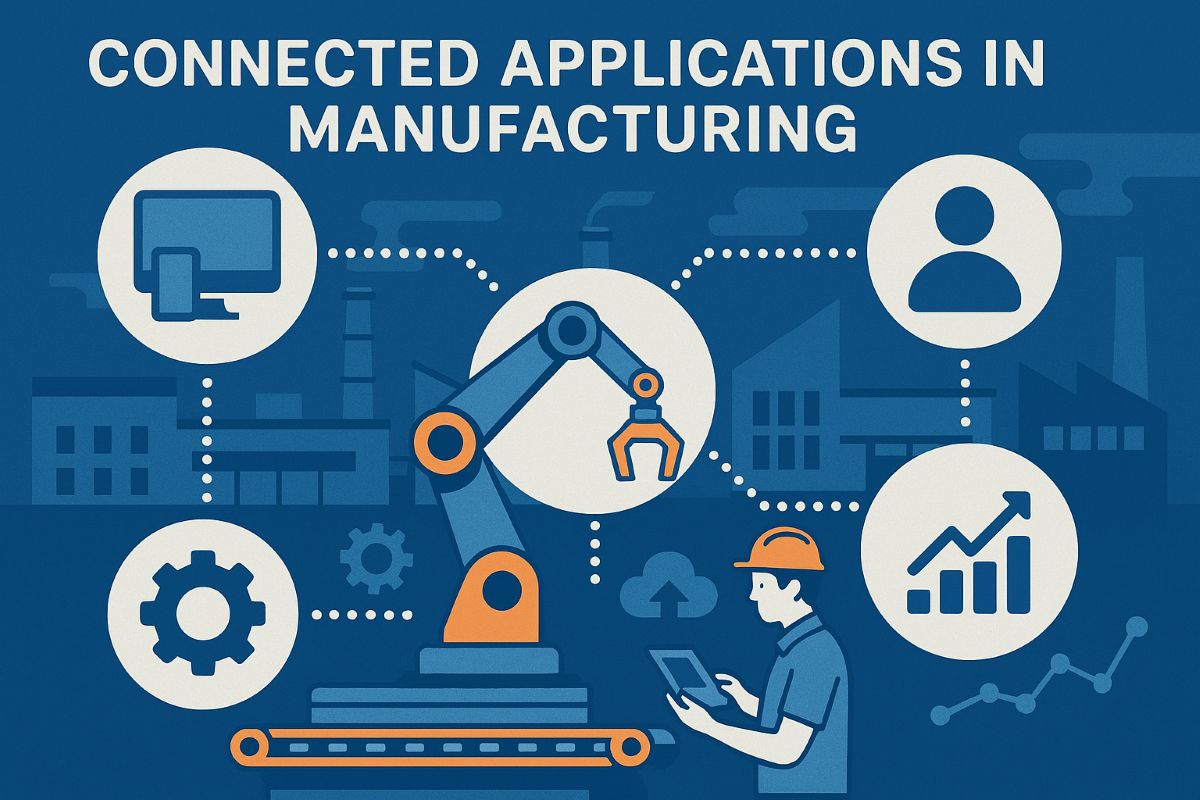
Connected applications make it possible to integrate important industrial functions such as production management, plant operations, production planning, supply chain coordination, asset maintenance, and workforce collaboration. Instead of different departments operating independently, these systems exchange information continuously. Real-time data sharing enables faster decision making, improved efficiency, and better operational visibility throughout the organization.
In traditional manufacturing systems, many digital tools operate independently. Enterprise resource planning systems, maintenance management software, production monitoring platforms, and logistics applications are often disconnected. This separation creates data silos that slow down communication and make it difficult to coordinate operations effectively. Connected applications eliminate these barriers by integrating all operational data into a unified digital platform.
🌐 Understanding Connected Applications
Connected applications are integrated software systems that communicate across different operational functions inside an organization. These applications gather information from machines, industrial sensors, enterprise databases, and workforce systems to provide a complete picture of manufacturing performance. The integration of operational technology with information technology creates a digital infrastructure that supports modern smart factories.
Several advanced technologies enable connected industrial environments. Industrial Internet of Things platforms allow machines and sensors to collect data continuously. Cloud computing platforms store and process this information at large scale. Advanced analytics and artificial intelligence analyze operational patterns and provide valuable insights that help organizations optimize production and maintenance processes.
When manufacturing systems become connected, engineers and managers gain real-time access to operational information. Instead of waiting for manual reports or delayed data collection, decision makers can monitor plant conditions instantly. This improves responsiveness and allows organizations to resolve operational issues before they affect productivity.
🔎 Examples of Connected Industrial Systems
- 🏭 Production machines sending operational data to manufacturing execution systems
- 📊 Plant performance dashboards analyzing productivity and efficiency
- 📦 Supply chain platforms monitoring inventory and material flow
- 🔧 Asset management systems predicting equipment maintenance needs
- 👷 Workforce applications coordinating tasks and safety monitoring
🏭 Connected Applications for Production
Production processes generate large amounts of operational data including machine performance indicators, process parameters, product quality metrics, and energy consumption information. Connected production applications collect and analyze this data continuously to improve manufacturing efficiency.
Manufacturing execution systems and industrial IoT platforms are commonly used to monitor production activities across the shop floor. These systems gather information from programmable logic controllers, sensors, and machine interfaces installed on industrial equipment. The data is transmitted to centralized dashboards where engineers can observe production performance in real time.
With connected production systems, abnormal machine behavior can be detected early. Operators receive alerts when process parameters move outside acceptable ranges, allowing them to take corrective actions immediately. This proactive approach helps maintain consistent product quality and stable production output.
Key Benefits of Connected Production
- 📡 Continuous monitoring of machines and production lines
- 📊 Automatic collection of operational data
- ⚙️ Real time process optimization
- 🚨 Early detection of abnormal machine conditions
- 🏭 Improved production quality and reliability
📊 Connected Production Flow
Machine Sensors ➜ Industrial Gateway ➜ Cloud Platform ➜ Production Dashboard ➜ Process Optimization
⚙️ Connected Applications for Operations
Operations management ensures that all industrial systems function smoothly and efficiently. Connected operational applications integrate information from production equipment, utility systems, quality control processes, and maintenance platforms. This integration provides plant managers with a complete overview of operational performance.
Real-time dashboards display key performance indicators such as production output, equipment availability, energy consumption, and operational efficiency. By monitoring these metrics continuously, plant managers can identify performance gaps and implement improvement strategies quickly.
- 📊 Real time plant performance dashboards
- 📈 Monitoring of operational efficiency metrics
- ⚡ Energy consumption monitoring
- 🚨 Alarm and event tracking systems
- 🔍 Root cause analysis of operational issues
📅 Connected Applications for Planning
Production planning coordinates manufacturing schedules based on customer demand, machine availability, and raw material supply. Connected planning applications integrate information from enterprise systems, production monitoring platforms, and supply chain networks. This integration enables planners to generate optimized production schedules.
Advanced planning systems use predictive analytics to analyze historical production data and forecast future demand patterns. When conditions change, such as new customer orders or supply delays, the system automatically adjusts production schedules to maintain operational efficiency.
- 📦 Demand driven production scheduling
- 📊 Improved forecasting accuracy
- 🔄 Dynamic schedule adjustments
- 🧩 Integration with ERP and manufacturing systems
- 📉 Reduction in inventory and production delays
📦 Connected Applications for Supply Chain
Supply chain operations involve coordination between suppliers, warehouses, logistics providers, and manufacturing plants. Connected supply chain applications provide real time visibility of materials and product movement throughout the entire supply network.
Modern supply chain platforms integrate transportation management systems, warehouse management systems, and procurement applications. This connectivity ensures that production teams always have accurate information about inventory levels and delivery schedules.
- 🚚 Real time shipment tracking
- 📦 Automated inventory monitoring
- 📊 Supplier performance analysis
- 🔄 Synchronization of supply and demand
- 🌍 Global logistics coordination
🔧 Connected Applications for Asset Management
Industrial equipment such as turbines, boilers, pumps, compressors, and motors require continuous monitoring to ensure reliable operation. Connected asset management applications allow organizations to track equipment health through sensors and predictive analytics.
These systems analyze operational parameters including vibration, temperature, lubrication conditions, and energy consumption. When abnormal patterns appear, the system predicts potential equipment failure and schedules maintenance before breakdowns occur.
- 🔍 Continuous equipment condition monitoring
- 📈 Predictive maintenance analytics
- 📅 Automated maintenance scheduling
- 📊 Asset performance tracking
- 💰 Reduced downtime and maintenance cost
👷 Connected Applications for Workforce
Human workers remain essential to industrial operations even in highly automated factories. Connected workforce applications provide employees with digital tools that improve productivity, safety, and collaboration. These applications allow workers to access operational data, maintenance instructions, and communication tools directly from mobile devices.
- 📱 Mobile workforce applications
- 📋 Digital work instructions
- 🦺 Safety monitoring and alerts
- 💬 Team collaboration platforms
- 📊 Workforce performance monitoring
🏁 Conclusion
Connected applications are transforming manufacturing by integrating machines, enterprise software, operational data, and employees into a unified digital ecosystem. This integration eliminates traditional data silos and enables organizations to monitor operations continuously, optimize production processes, and improve collaboration across departments.
As industries continue adopting Industry 4.0 technologies, connected applications will play an increasingly important role in creating intelligent, efficient, and highly responsive manufacturing environments. Organizations that invest in these systems today will gain significant competitive advantages in productivity, reliability, and operational excellence.